
 By
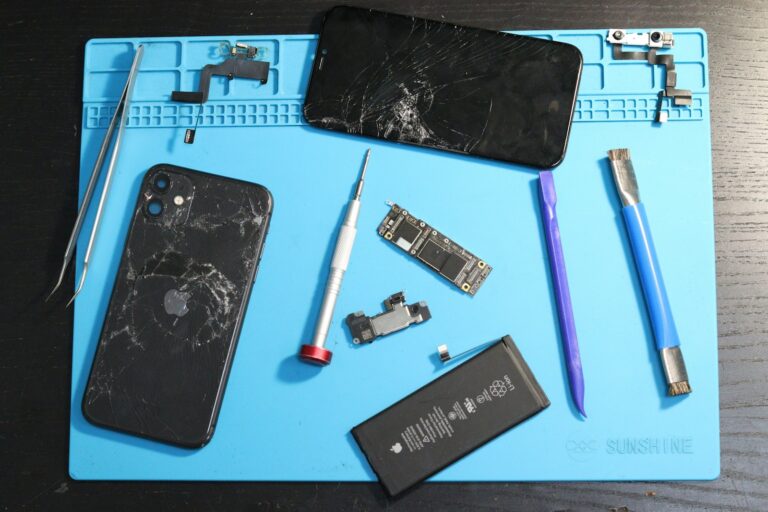
Right to repair laws 2026 now protect more than a quarter of Americans, forcing manufacturers to sell the parts, tools, and repair manuals that independent shops need instead of locking repairs inside authorized service centers. Washington and Colorado took effect on January 1, 2026, joining New York, California, Minnesota, and Oregon, while Texas followed on September 1, 2026, becoming the first Republican-led state to pass one. Here is exactly what changed, state by state, and what it means the next time your phone or laptop breaks.
What Are Right to Repair Laws 2026 Changing for Consumers?
Right to repair laws require manufacturers to make the same parts, diagnostic tools, and repair documentation available to consumers and independent shops that they already give to their own authorized technicians. Before these laws, companies like Apple and Samsung could restrict schematics and OEM parts to approved repair networks, pushing people toward costlier official repairs or early replacement. According to the U.S. Public Interest Research Group (PIRG), more than one-quarter of Americans were covered by some form of electronics right to repair law as of January 1, 2026, up from zero just three years earlier.
The laws vary by state, but most share three core requirements: fair pricing on OEM parts, access to repair manuals and diagnostic software, and a ban on “parts pairing,” the practice of software-locking a replacement part to a specific device’s serial number so it won’t function unless installed by an authorized technician, even when the part itself is genuine and undamaged.
Which States Have Right to Repair Laws 2026 Already in Force?
Seven states now have an active consumer-electronics right to repair law, each with a different scope and start date. The table below lists every state law in force as of November 2026, based on reporting from PIRG and iFixit.
| State | Law | Effective Date | What It Covers |
|---|---|---|---|
| New York | Digital Fair Repair Act | Dec 28, 2023 | Consumer electronics (cars, medical and farm equipment excluded) |
| California | SB 244 | Jul 1, 2024 | Electronics and appliances (game consoles, medical devices excluded) |
| Minnesota | Right to Repair Law | Jul 1, 2024 | Consumer electronics and digital devices |
| Oregon | SB 1596 | Jan 1, 2025 | Electronics; bans parts pairing |
| Colorado | Digital Electronic Equipment Law | Jan 1, 2026 | Electronics; bans parts pairing |
| Washington | HB 1483 | Jan 1, 2026 | Cellphones and electronics; tools for independent shops |
| Texas | Right to Repair Law | Sep 1, 2026 | Products $50+ sold after Sep 1, 2026; first GOP-led state |
Massachusetts and Connecticut have related consumer-protection provisions moving through their legislatures, and PIRG’s tracking shows 22 states considered right to repair bills in 2026 alone, so this table is likely to grow again before the year is out.
What Does New York’s Digital Fair Repair Act Require?
New York’s Digital Fair Repair Act, in force since December 28, 2023, was the first broad consumer-electronics repair law in the country. It requires manufacturers of digital electronics sold in New York to provide the same parts, tools, and documentation to independent repair shops and owners that they give their own authorized network, at fair and reasonable terms. The law excludes motor vehicles, medical devices, and agricultural equipment, and it does not force a company to redesign a product purely to make it easier to fix.
What Does California’s SB 244 Cover?
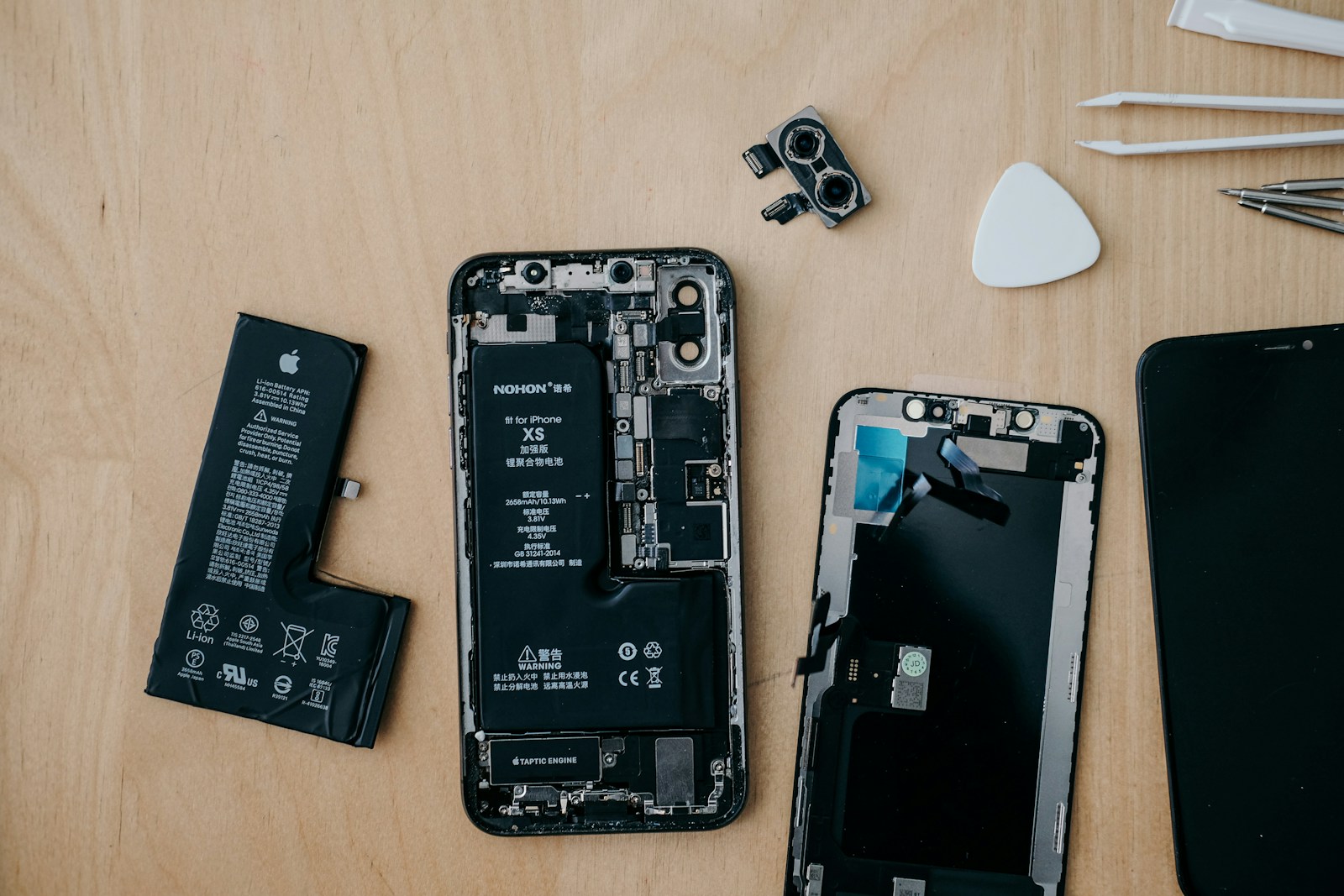
California’s SB 244 took effect July 1, 2024, and covers electronics and appliances manufactured and first sold on or after July 1, 2021. Devices that sell for $50 to $99 are covered for three years, and products priced at $100 or more get seven years of guaranteed parts and documentation access. The law specifically excludes video game consoles, alarm systems, and medical devices. California’s version is often cited as the model for Minnesota’s nearly identical July 2024 law, which covers the same categories under its own state statute. Both laws require manufacturers to offer parts, tools, and documentation on terms that are “fair and reasonable,” a phrase state regulators have interpreted to mean pricing roughly in line with what an authorized dealer network already pays internally, not a markup designed to discourage independent repair.
How Are Colorado and Washington Rolling Out Repair Rights This Year?
Colorado’s digital electronic equipment law and Washington’s HB 1483 both took effect January 1, 2026, making 2026 the year right to repair coverage jumped past a quarter of the U.S. population. Colorado’s law follows Oregon’s lead in banning parts pairing outright, meaning a manufacturer cannot use software locks to reject a genuine replacement part just because an authorized technician didn’t install it. Washington’s HB 1483 focuses on giving independent repair businesses the diagnostic tools and documentation needed for cellphones and other electronics, closing a gap that had pushed Pacific Northwest repair shops to work around official parts channels for years.
Why Did Texas Become the First Republican-Led State to Pass This Law?
Texas Governor Greg Abbott signed the state’s right to repair law in 2026, making Texas the seventh state with an electronics repair law and the first with a Republican-controlled legislature and governorship, according to iFixit’s coverage of the signing. The law took effect September 1, 2026, and applies to products that cost $50 or more and were manufactured and first sold after that date. Its passage signaled that repair rights had stopped being a partisan issue, with consumer cost and farm-equipment repair complaints from Texas ranchers helping build bipartisan support in the legislature.
What’s Still Not Covered by Right to Repair Laws 2026?
Every state law listed above excludes video game consoles, and most carve out medical devices, home alarm systems, and motor vehicles entirely. Cars run under a separate, older framework: Massachusetts voters approved a telematics-data-access ballot measure back on November 3, 2020, by roughly 75%, requiring automakers to give owners and independent shops access to the mechanical data their vehicles transmit. Automakers sued to block it, and a federal judge dismissed that challenge on February 12, 2025, according to Ballotpedia’s case tracking, but the measure still only applies in Massachusetts.
Farm equipment has followed its own path too, through antitrust enforcement rather than consumer-electronics statutes. The Federal Trade Commission and five states, Arizona, Illinois, Michigan, Minnesota, and Wisconsin, reached a settlement with John Deere on July 8, 2026, after suing the company in January 2025 over restricting repair tools to its authorized dealer network. Under the FTC’s order, Deere must now give farmers and independent repair shops the same diagnostic software and repair resources it gives its own dealers, on fair terms, for the next 10 years.
Why Are Manufacturers Pushing Back on These State Laws?
The Consumer Technology Association (CTA), the trade group representing device manufacturers, has formally opposed right to repair bills in Massachusetts, Minnesota, Maine, Oregon, and Rhode Island. Its objections center on three points: letting consumers sue manufacturers directly creates litigation risk no existing state law allows for, compliance deadlines often leave less than a year to redesign supply chains, and applying new rules to products already on shelves creates what CTA calls consumer confusion and retroactive compliance burden.
iFixit, the repair-advocacy group that tracks this legislation closely, agrees the state-by-state patchwork raises real compliance costs for manufacturers selling nationwide, but argues that’s still a better outcome than no repair access at all. That tension is exactly why lobbying against bills like Colorado’s continued even after the law took effect in January 2026, and why 22 states still had active right to repair bills moving through committee as of this year.
How Does This Affect Repairing Your iPhone, Pixel, or Laptop?
If you live in one of the seven covered states, a manufacturer now has to sell an independent shop the same screen, battery, or logic board it sells its own certified technicians, at a fair price, along with the documentation to install it correctly. That matters directly for recent phones like the iPhone Ultra Foldable and the Google Pixel 11 Pro XL, where a cracked hinge or a damaged camera module used to mean an authorized-only repair or a full replacement. Parts-pairing bans in Oregon and Colorado go further, stopping a manufacturer from using a firmware check to reject a genuine part simply because an independent shop installed it instead of an authorized one.
Laptops and tablets are covered under the same statutes as phones in every state listed above, so a cracked laptop hinge or a swollen battery falls under the same rules. If you’re running security-sensitive hardware, it’s still worth checking a repair shop’s credentials before handing over a device that holds data covered by updates like the iOS 26.6.1 security update, since independent shops aren’t required to meet the same certification standards as authorized ones.
How Much Could Right to Repair Laws 2026 Actually Save You?
PIRG’s “Repair Saves Families Big II” report, published in August 2026, estimates that broader repair access could cut the average household’s electronics and appliance spending by 21.6%, saving a typical family about $382 a year and $49.6 billion nationally if every state adopted similar rules. That figure assumes people actually repair devices instead of replacing them once official channels quote a high price, which is the exact behavior these laws are designed to make cheaper and more available through independent shops.
The savings are uneven by state for now, since only seven states have a law in force. PIRG’s state-level estimates, like a projected $680 million in combined annual savings for Maine households alone, only apply where a bill has actually passed, which is why residents in uncovered states still depend on whatever repair policy an individual manufacturer chooses to offer voluntarily.
Is This Happening Outside the United States Too?
Yes, and the European Union is further along in some respects. The EU’s Right to Repair Directive (2024/1799) entered into force in July 2024, and member states were required to apply their national implementing rules from July 31, 2026. It doesn’t create a blanket right to repair every product; coverage is limited to categories that already carry EU repairability requirements, such as smartphones, tablets, and household appliances, with local space heaters added from the same date and e-bike and scooter batteries scheduled to join on February 18, 2027.
Enforcement is uneven across the bloc. As of late October 2026, Germany and Italy were among the only major markets to have fully transposed the directive into national law, and the European Commission sent formal notices to 18 member states in September 2026 for failing to confirm complete transposition. That gap between a directive taking effect on paper and actually being enforceable in a given country mirrors the same patchwork problem playing out across US states.
How Do You Check If Your Device Actually Qualifies?
Run through four checks before you assume a repair falls under one of these laws. First, confirm your state is on the list: New York, California, Minnesota, Oregon, Colorado, Washington, or Texas. Second, check the device’s price against your state’s threshold, since California and Texas both set a $50 floor and exclude cheaper accessories. Third, confirm the manufacture date, because every law only applies going forward from its own effective date, not retroactively to older hardware. Fourth, rule out excluded categories: game consoles, medical devices, alarm systems, and motor vehicles sit outside these statutes everywhere.
If your device clears all four checks, an independent shop in your state is legally entitled to buy the same part and documentation an authorized center would use, at a comparable price.
What Should You Do If a Manufacturer Refuses to Comply?
Start by confirming your state has an active law and that your device falls within its price and date thresholds, since most laws only cover products manufactured after a specific cutoff. If a manufacturer still refuses to sell parts or documentation to a shop or owner who qualifies, PIRG recommends filing a complaint with your state’s Attorney General consumer protection division, which enforces these laws.
Keep a record of the request, the device’s purchase date and price, and the manufacturer’s response, since that documentation is what the state needs to act on a complaint. Smart-home device owners running integrations like an Apple smart home hub should check coverage separately, since connected-home hardware isn’t always classified the same way as phones under these statutes.
The Bottom Line on Right to Repair Laws 2026
Seven states now guarantee that an independent shop can buy the same parts, tools, and documentation an authorized center uses, and that coverage keeps expanding: Washington and Colorado joined in January, Texas joined in September, and 22 states still had active bills in committee this year. None of it is retroactive, none of it covers game consoles or medical devices, and enforcement still depends on your state’s Attorney General actually acting on complaints. But for the first time, where you live now measurably changes how much your next phone, laptop, or tablet repair is going to cost.
Frequently Asked Questions About Right to Repair Laws 2026
Does right to repair cover video game consoles?
No. California’s SB 244 and most other state laws explicitly exclude video game consoles, along with medical devices, alarm systems, and farm equipment in some states, so console repairs still go through manufacturer-approved channels only.
What is parts pairing, and why do new laws ban it?
Parts pairing is when a device’s firmware links a specific replacement part, like a screen or battery, to that device’s serial number, so the part only works at full function if installed by an authorized technician. Oregon and Colorado now ban this practice outright for covered electronics.
Is there a federal right to repair law in the US?
No. As of November 2026, there is no federal right to repair law for consumer electronics. Coverage exists only in the seven states listed above, which is why the rules you get depend entirely on where you live.
Will using a third-party repair shop void my warranty?
Under the Magnuson-Moss Warranty Act, a manufacturer cannot void your warranty just because you used an independent repair shop or third-party part, unless it can prove that specific part caused the damage being claimed.
Does right to repair apply to laptops and tablets, not just phones?
Yes. Every state law covered here defines “digital electronic equipment” broadly enough to include laptops and tablets alongside phones, as long as the device meets the state’s price and manufacture-date thresholds.
Which state passed a right to repair law despite having a Republican-led government?
Texas. Governor Greg Abbott signed its right to repair law in 2026, making it the seventh state with one and the first where both the legislature and governorship are Republican-controlled, per iFixit’s reporting on the signing.
Does the EU have stronger right to repair rules than the US?
In some ways, yes. The EU’s Right to Repair Directive applies across member states starting July 31, 2026, but enforcement still lags: only a handful of countries, including Germany and Italy, had fully transposed it into national law by late October 2026, so actual protection still depends on where you live, just as it does in the US.
Subscribe for Newsletter

