
 By
ByThe Google Pixel 11 Pro XL is Google’s 2026 flagship, built around the new Tensor G6 chip, a brighter 6.8-inch display, and a redesigned camera system with Magic Capture and HiLight. It launched on August 12, 2026, with prices starting at $1,299, and it ships with seven years of guaranteed software updates.
What Is the Google Pixel 11 Pro XL?
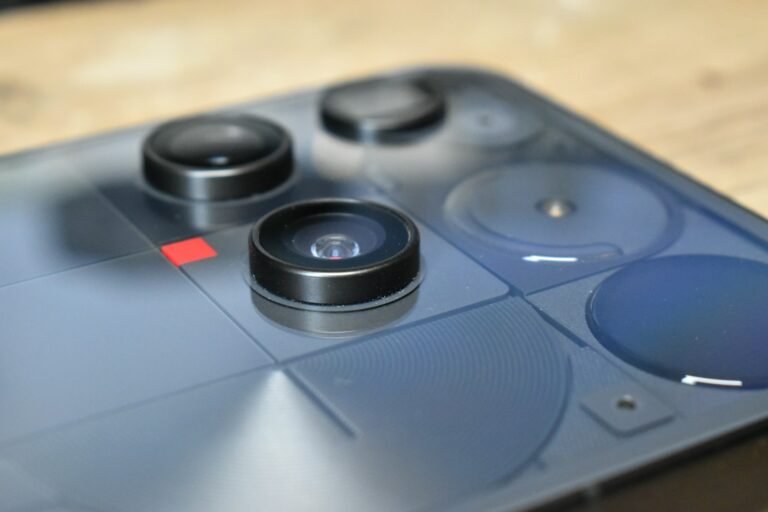
The Google Pixel 11 Pro XL is the largest phone in Google’s fourth-quarter 2026 lineup, sitting above the standard Pixel 11 and Pixel 11 Pro. It runs the Tensor G6 chip paired with 16GB of RAM, a 6.8-inch Super Actua display, and a triple rear camera system built around a 50MP main sensor. Google sells it alongside the Pixel 11, Pixel 11 Pro, and the foldable Pixel 11 Pro Fold.
| Spec | Pixel 11 Pro XL |
|---|---|
| Chip | Google Tensor G6 + Titan M3 |
| Display | 6.8″ Super Actua, 1344×2992, up to 3,600 nits |
| RAM / Storage | 16GB / 256GB, 512GB, or 1TB |
| Rear cameras | 50MP main + 48MP ultrawide + 48MP 5x telephoto |
| Front camera | 42MP, 103° field of view |
| Battery | 5,115mAh, rated 30+ hours |
| Charging | Qi2.2 wireless, USB-C wired |
| Starting price | $1,299 (12GB/256GB) |
| OS updates | 7 years guaranteed |
What’s New in the Tensor G6 Chip?
The Tensor G6 is Google’s sixth-generation custom silicon, and it’s the first Tensor chip built on a more advanced process node than its predecessor, which Google says improves both raw performance and power efficiency. Google pairs it with the third-generation Titan M3 security coprocessor, which handles on-device encryption and biometric data separately from the main chip.
The bigger change is what the chip enables rather than raw benchmark scores. Tensor G6 runs more of Gemini’s on-device features locally, which is what powers Magic Capture and the proactive notifications behind HiLight without sending every frame to the cloud. Google detailed these changes in its official Pixel 11 Pro XL announcement.
Google has historically prioritized machine-learning throughput over peak CPU or GPU scores with Tensor chips, and Tensor G6 continues that pattern: it trades some raw multi-core performance against dedicated smartphone gaming chips for a much stronger neural processing unit. In practice that means the Pixel 11 Pro XL handles on-device transcription, live translation, and photo processing faster than the Pixel 10 Pro XL, even where synthetic CPU benchmarks show only a modest year-over-year gain.
How Is the Pixel 11 Pro XL Different from the Standard Pixel 11 and Pixel 11 Pro?
All three phones share the same Tensor G6 chip and the same core Gemini Intelligence features, so the differences come down to screen size, camera hardware, and battery capacity rather than raw performance. The standard Pixel 11 uses a smaller 6.3-inch display and a dual-camera setup without the telephoto lens, while the Pixel 11 Pro and Pixel 11 Pro XL share an identical camera system and differ mainly in screen size and battery.
- Pixel 11 (6.3″): dual camera, no telephoto lens, starts at $899
- Pixel 11 Pro (6.3″): full triple-camera system, same sensors as the Pro XL, starts at $1,099
- Pixel 11 Pro XL (6.8″): identical cameras to the Pro, larger battery and display, starts at $1,299
If camera quality is your priority and you don’t need the largest screen, the standard Pixel 11 Pro at $1,099 gets you the same sensors as the Pro XL for $200 less. The Pro XL only makes sense if you specifically want the bigger display and the extra battery capacity that comes with it.
How Do the Pixel 11 Pro XL Cameras Compare to the Pixel 10 Pro XL?
The Pixel 11 Pro XL keeps the same 50MP main sensor resolution as the Pixel 10 Pro XL but redesigns the ultrawide and telephoto modules and adds new sensor hardware Google says improves low-light detail. The front camera jumps to 42MP with a wider 103-degree field of view, useful for group selfies and video calls.
- 48MP ultrawide with macro autofocus, up from a fixed-focus ultrawide on the Pixel 10 Pro XL
- 48MP 5x telephoto lens for cleaner optical zoom shots
- Magic Capture, which buffers frames continuously so you can pull a sharp still from a moment that already happened
- New image sensors Google says improve detail retention in mixed and low light

What Is HiLight and How Does It Work?
HiLight is a new notification system on the Pixel 11 Pro that uses color-coded LED light around the camera bar to signal timely information, such as an incoming call, a timer finishing, or a package arriving, even while the phone is face down on a table. It’s designed so you don’t have to pick up the phone to know something needs attention.
Each color maps to a different category of alert, and you control which apps and events trigger HiLight from Settings. Google covers the full list of supported triggers in its HiLight feature post, since third-party apps can opt in over time.
How Much Does the Google Pixel 11 Pro XL Cost?
The Google Pixel 11 Pro XL starts at $1,299 for the 12GB RAM/256GB storage model. Stepping up to 16GB RAM with 512GB storage costs $1,419, and the top 16GB/1TB configuration is priced at $1,649. Preorders opened August 12, 2026, with retail availability from August 20.
- Pixel 11: starts at $899
- Pixel 11 Pro: starts at $1,099
- Pixel 11 Pro XL: starts at $1,299
Google Pixel 11 Pro XL vs iPhone 17 Pro: Which Should You Buy?
The choice mostly comes down to ecosystem and how you want AI features delivered. The Pixel 11 Pro XL leans on on-device Gemini Intelligence and a 7-year update commitment, while Apple’s iPhone lineup ties tightly into iCloud and Apple Intelligence. If you’re weighing the two, our iPhone 17 complete guide breaks down Apple’s current flagship in the same depth.
| Feature | Pixel 11 Pro XL | iPhone 17 Pro |
|---|---|---|
| Chip | Google Tensor G6 | Apple A19 Pro |
| Starting price | $1,299 | $1,199 |
| Update commitment | 7 years | Typically 5-6 years |
| On-device AI | Gemini Intelligence | Apple Intelligence |
| Charging | Qi2.2 wireless | Qi2 wireless |
How Does Gemini Intelligence Work on the Pixel 11 Pro XL?
Gemini Intelligence on the Pixel 11 Pro XL runs a mix of on-device and cloud processing, using Tensor G6 for tasks that need to stay private or work offline, like call screening and live translation, and cloud Gemini models for heavier requests. It’s a proactive layer rather than a chatbot you have to open: it surfaces reminders, drafts replies, and organizes screenshots without being asked.
If you want to see how far Google has pushed the underlying models, our breakdown of hidden Gemini 3.0 Pro features covers capabilities that feed into what the Pixel 11 Pro XL does on-device. For context on how competing assistants compare, see our guide to Claude AI’s 2026 updates, and if you shoot a lot of AI-edited photos, our GPT Image 1.5 vs Nano Banana Pro comparison is useful background on the image models behind Pixel’s computational photography.
How Does the Pixel 11 Pro XL Handle AI Photo Editing?
Magic Editor on the Pixel 11 Pro XL runs a mix of on-device masking and cloud-based generative fill to remove objects, reposition subjects, and relight photos directly inside Google Photos. It’s a narrower, phone-optimized version of the same idea behind desktop tools like Photoshop’s Generative Fill, which now lets editors pick between Adobe Firefly, Nano Banana, and other AI models for similar tasks.
The practical difference is control: Magic Editor is built for quick fixes with a handful of presets, while desktop editing software gives you granular prompts, layers, and model choice. If you regularly shoot on the Pixel 11 Pro XL and finish edits on a computer, exporting the original RAW-equivalent file before running Magic Editor preserves more detail for later retouching.
What Are the Battery and Display Specs?
The Pixel 11 Pro XL packs a 5,115mAh battery, which Google rates for more than 30 hours of use on a single charge with the adaptive battery mode enabled. The 6.8-inch Super Actua display runs at 1344×2992 resolution with a 120Hz refresh rate and peaks at up to 3,600 nits of brightness, making it noticeably easier to read in direct sunlight than last year’s model.
Charging is handled over Qi2.2 for wireless power delivery alongside standard USB-C wired charging, and the front glass upgrades to a version of Gorilla Glass Victus 2 that Google says is roughly twice as scratch-resistant as the previous generation. Full specs are listed on Google’s own Pixel 11 Pro specs page.
What Colors Does the Pixel 11 Pro XL Come In?
Google sells the Pixel 11 Pro XL in four finishes at launch: Obsidian (black), Porcelain (off-white), Moonstone (a muted blue-gray), and a limited Sunset (warm coral) option available only through the Google Store. All four use the same matte-finish aluminum frame with a polished camera bar, and color availability can vary slightly by carrier and region.
Is the Pixel 11 Pro XL Water and Dust Resistant?
Yes. The Pixel 11 Pro XL carries an IP68 rating, meaning it can survive submersion in up to 1.5 meters of fresh water for 30 minutes and is fully sealed against dust ingress. That rating covers accidental drops in water and rain exposure, but Google’s warranty still excludes liquid damage, so it isn’t a substitute for a waterproof case in genuinely wet environments like boating or swimming.
What Software Features Come With the Pixel 11 Pro XL?
Beyond Magic Capture and HiLight, the Pixel 11 Pro XL ships with the full Pixel software suite: Call Screen, which answers unknown numbers with an AI assistant and shows you a live transcript before you pick up; Recorder, which transcribes and summarizes voice memos and meetings on-device; and Magic Editor, which now handles more complex object removal and relighting requests directly in Google Photos.
Google also bundles a year of the Google One AI Premium plan with new Pixel 11 Pro XL purchases, which unlocks higher-usage Gemini access and 2TB of cloud storage. That perk has appeared with every Pro-tier Pixel since the Pixel 9 series and typically needs to be redeemed within a set window after activation.
How Does the Pixel 11 Pro XL Handle Video Recording?
The Pixel 11 Pro XL records up to 8K at 30fps on the main sensor and 4K at 60fps across all three rear cameras, with Video Boost processing footage in the cloud after upload to improve dynamic range and low-light detail. Google also carried over Night Sight video from the Pixel 10 series, applying the same computational pipeline it uses for still photos to moving footage.
- 8K/30fps on the main 50MP sensor
- 4K/60fps across main, ultrawide, and telephoto lenses
- Video Boost for improved dynamic range after cloud processing
- Night Sight video for low-light clips
What Else Did Google Announce Alongside the Pixel 11 Pro XL?
Google used the same event to launch the Pixel Watch 5 and the first-generation Pixel Tag, a Bluetooth item tracker that competes directly with Apple’s AirTag and works through Google’s Find Hub network. The Pixel 11 Pro Fold, Google’s third-generation foldable, was also announced with a thinner hinge and a new main camera shared with the Pixel 11 Pro XL.
None of these are required purchases alongside the phone, but the Pixel Tag is worth noting if you’re already inside Google’s ecosystem: it pairs directly with the Pixel 11 Pro XL’s ultra-wideband radio for precision finding, similar to how AirTags pair with iPhones.
Which Carriers Sell the Google Pixel 11 Pro XL?
In the US, the Pixel 11 Pro XL is available unlocked through the Google Store and directly from Verizon, T-Mobile, and AT&T, with each carrier running its own trade-in and installment promotions around launch. Buying unlocked from the Google Store gets you the plainest software experience with no carrier bloatware, while carrier-financed units often come with steeper bill-credit discounts if you’re switching networks or adding a line.
The phone supports both physical nano-SIM and eSIM, and US models ship as eSIM-only for the primary line on some carrier variants, mirroring the approach Google took with the Pixel 10 series. Check your specific carrier listing before buying if you rely on a physical SIM for travel or a secondary device.
Should You Trade In Your Old Phone for the Pixel 11 Pro XL?
Google’s trade-in program credits range from roughly $100 for older budget Android phones up to $600 or more for a Pixel 10 Pro XL or recent iPhone Pro model in good condition, applied directly at checkout. Trading in makes the most financial sense if your current phone still has a cracked-screen-free, fully functional condition, since Google’s estimator drops the offer sharply for visible damage or a failing battery.
Is the Google Pixel 11 Pro XL Worth Buying in 2026?
The Google Pixel 11 Pro XL is worth buying if you’re on a Pixel 9 or older, want the longest software support window on Android, or shoot a lot of photos in mixed lighting. If you already own a Pixel 10 Pro XL, the camera and chip upgrades are real but incremental, and waiting for the Pixel 12 cycle is reasonable unless HiLight or Magic Capture specifically solve a problem you have today.
Budget-conscious buyers who still want the same camera hardware should look at the standard Pixel 11 Pro instead, since it saves $200 for an identical sensor stack in a smaller body. The extra cost of the Pro XL buys you screen real estate and roughly a day of extra battery life, not better photos.
Frequently Asked Questions
When did the Google Pixel 11 Pro XL launch?
Google announced the Pixel 11 Pro XL on August 12, 2026, opened preorders the same day, and made it available at retail starting August 20, 2026.
How much does the Google Pixel 11 Pro XL cost?
Pricing starts at $1,299 for the 12GB RAM/256GB storage model, $1,419 for 16GB/512GB, and $1,649 for the top 16GB/1TB configuration.
What chip does the Google Pixel 11 Pro XL use?
It uses Google’s sixth-generation Tensor G6 chip alongside the Titan M3 security coprocessor, both designed in-house by Google.
Does the Google Pixel 11 Pro XL support Qi2.2 wireless charging?
Yes. The Pixel 11 Pro XL supports the Qi2.2 wireless charging standard in addition to wired USB-C charging.
How long will the Google Pixel 11 Pro XL receive updates?
Google guarantees seven years of OS updates, security patches, and Pixel Drop feature updates for the Pixel 11 Pro XL.
What is Magic Capture on the Pixel 11 Pro XL?
Magic Capture is a camera feature that continuously buffers recent frames so you can recover a sharp, well-timed still from a moment that already passed, useful for fast action or unpredictable subjects like kids and pets.
How is the Pixel 11 Pro XL different from the Pixel 11 Pro Fold?
The Pixel 11 Pro XL is a standard slab phone, while the Pixel 11 Pro Fold is Google’s book-style foldable that opens into a tablet-sized inner display. They share the Tensor G6 chip and much of the software experience, but the Fold trades some camera resolution and battery efficiency for its hinge and dual-screen design.
Subscribe for Newsletter

