
 By
ByThe Apple Smart Home Hub is a rumored device, code-named J490, that Bloomberg’s Mark Gurman reports will launch on October 13, 2026, with a 6-inch square display, Siri-powered AI, and face- or voice-based recognition for different family members. It would mark Apple’s first entry into the connected home control-panel category already occupied by Amazon’s Echo Hub and Google’s Nest Hub Max. Apple has not confirmed the date or the product itself, so everything below is reported detail, not an official announcement.
That single fact (an unconfirmed but detailed leak, pointing to a mid-October reveal) is the reason this device has dominated Apple rumor coverage for weeks. Below is what every report agrees on, where they conflict, and how the rumored hardware stacks up against the smart displays already sitting in millions of kitchens.
- Reported launch: October 13, 2026, via press release rather than a live keynote
- Reported display: 6-inch square screen, wall-mount or countertop versions
- Reported signature feature: multi-user face and voice recognition for shared households
- Still unconfirmed: official name, price, and whether Apple keeps the October 13 date
What Is the Apple Smart Home Hub?
It is a dedicated, always-plugged-in screen built to sit on a counter or mount on a wall and run a household’s smart devices, calendars, and video calls from one place. Unlike an iPad propped on a stand, Bloomberg reports it runs a new operating system built specifically for this role, blending pieces of iOS, tvOS, and watchOS around a heavily upgraded version of Siri.
It is not a new idea for the industry. Amazon shipped the Echo Hub in 2023 and Google has sold smart displays since 2018. What’s new is Apple bringing its ecosystem (Messages, FaceTime, Photos, HomeKit) into a shared household screen instead of keeping everything tied to a single person’s iPhone.
Why Is Apple Entering the Smart Display Market Now?
Apple is reportedly moving into smart displays now because its existing smart home products (HomePod and Apple TV) only ever addressed one part of the house: audio and the living room television. Neither gives a household a shared screen for calendars, notes, or door cameras the way a wall-mounted panel can, which is exactly the gap Amazon and Google have been filling since the late 2010s.
Timing also lines up with Apple’s broader Siri rebuild. The company has spent more than a year overhauling Siri’s underlying AI models after widely reported delays to promised features, and a new always-on household screen gives that upgraded assistant a more natural home than a phone lock screen. A hub is also a lower-risk way to test a shared-household AI experience before Apple commits to it across the entire iPhone and iPad lineup.
There’s a competitive angle too. Amazon and Google have normalized the idea of a always-on kitchen screen for calendars and video calls, and Apple has watched that category grow for nearly a decade without a product of its own in it. Entering now, alongside a major Siri upgrade, lets Apple position the hub as a smarter, more private alternative rather than a late copy.
When Will the Apple Smart Home Hub Launch?
Multiple outlets, citing Bloomberg’s Mark Gurman, report that Apple will introduce the device on Tuesday, October 13, 2026, alongside two companion products (9to5mac, September 30, 2026). Apple historically announces new hardware categories through a press release and a video rather than a live keynote, and reporting suggests this launch will follow that quieter pattern.
Treat the date itself as likely rather than certain. Gurman’s reporting has correctly predicted several past Apple launches, but his own coverage has also noted the project was delayed at least once before reaching this stage, according to TechRepublic’s October 2026 report. If you’re planning a purchase around this date, wait for Apple’s own confirmation before committing.
What Design and Display Does the Hub Use?
Reports describe a 6-inch square display available in two versions: a countertop model with its own stand and a wall-mounted model that sits flush against a plate. Both are said to draw visual inspiration from the iMac G4, the 2002 Mac with a dome base and a screen that floated on an adjustable arm, down to a single front-facing camera lens where the iMac G4 had its camera accessory.
There is no battery in the reported design. The hub stays plugged in permanently, trading portability for a screen that’s always on and always ready to answer, show a calendar, or accept a video call. Microphones and speakers are said to live in the base rather than the display itself.
The choice of a 6-inch screen (smaller than every rival smart display on the market) suggests Apple is targeting a bedside table, hallway, or entryway rather than trying to replace a kitchen’s primary display. A smaller panel also keeps manufacturing costs down for a first-generation product, which fits Apple’s usual pattern of starting a new hardware category modestly before expanding sizes in later generations, as it did with the Apple Watch and iPad mini.
How Does Multi-User Recognition Work?
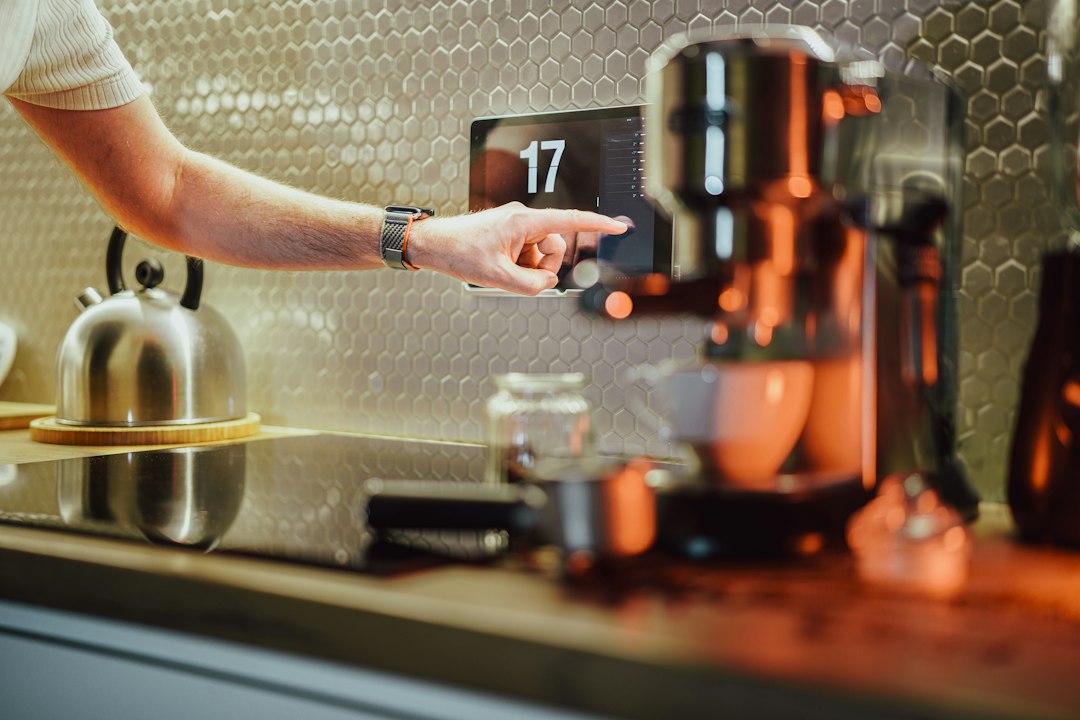
The headline feature across every report is personalization for shared households. The hub is said to use its camera and microphones to recognize which family member is standing in front of it, then show that person’s own messages, calendar, notes, and app layout instead of a single shared profile.
A reported “visitor mode” hides personal content when the hub detects someone it doesn’t recognize, and users can layer on extra security by requiring an iPhone nearby to unlock sensitive views. If the hub fails to identify a face or voice, the iPhone is described as the fallback method for confirming who’s asking. This mirrors the layered-verification approach already common in passkey-based authentication, just applied to a shared screen instead of a login form.
What Privacy and Data Concerns Does the Camera Raise?
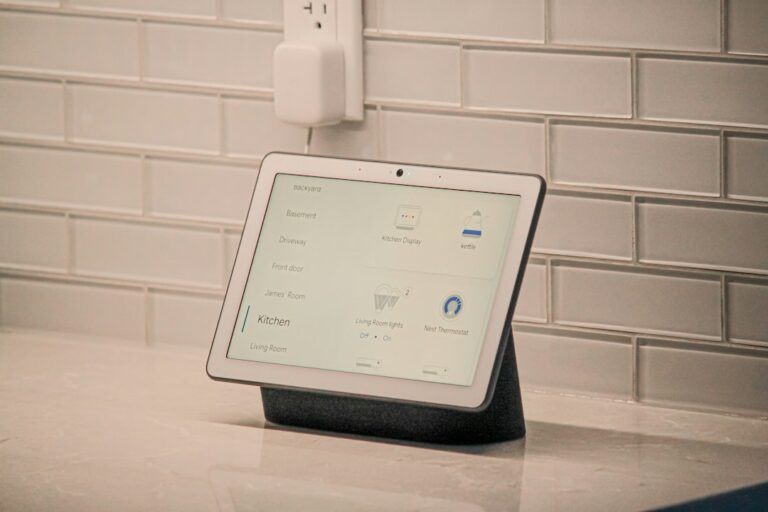
A household screen with an always-on camera, positioned to recognize faces, is exactly the kind of device privacy researchers scrutinize closely. Google’s Nest Hub Max already runs face recognition through its Face Match feature, and reporting on Apple’s hub suggests similar on-device processing rather than sending camera frames to a server for identification, though Apple has not published technical details to confirm that.
Apple’s past marketing has leaned heavily on processing sensitive data (Face ID, dictation, Photos search) on the device itself rather than in the cloud, and a camera-equipped household hub would likely follow the same pattern to match that positioning. Until Apple publishes a privacy white paper for the product, treat on-device processing as the probable approach rather than a confirmed one.
The bigger open question is what happens with guests. The reported visitor mode hides personal content from unrecognized faces, but it’s unclear from current reporting whether the hub stores images of visitors at all, for how long, or whether that data syncs to iCloud alongside a household’s other HomeKit activity.
What Smart Home Features Will It Control?
Beyond recognizing people, the hub is reported to act as a full HomeKit control panel: locking and unlocking doors, adjusting thermostats, and triggering scenes across lights and connected accessories. It’s also described as an intercom, letting someone in one room page a phone or another hub elsewhere in the house.
Media playback rounds out the feature set. Reports mention music playback through connected speakers, FaceTime-style video calling using the front camera, and photo slideshows pulled from a household’s shared albums when the screen is idle, similar to how a digital photo frame behaves between tasks.
For households that already run security cameras, doorbells, or locks through HomeKit, the hub is reported to function as a dedicated monitoring station, showing camera feeds and door status without needing to open the Home app on a phone first. That’s the same pitch Amazon makes for the Echo Hub, which was built explicitly as a wall-mounted control panel rather than a general-purpose smart display.
What Operating System and AI Power the Apple Smart Home Hub?
It is reported to run software built specifically for a shared, screen-based device rather than a repurposed iPadOS. Descriptions point to an operating system that borrows interface ideas from tvOS (for the idle, ambient screen), watchOS (for quick glanceable complications like weather or a timer), and iOS (for apps, Messages, and FaceTime), unified under a heavily upgraded Siri.
That Siri overhaul has been in development separately for over a year and is the piece Apple reportedly needs to finish before any hub ships. Faster processors in the hub and its companion devices are described as necessary to run the AI models locally, rather than depending entirely on a server round-trip for every request.
Running those models on the device, rather than purely in the cloud, also explains why reports tie the hub’s launch to new chips in the HomePod mini and Apple TV at the same time. All three devices reportedly need enough on-device processing power to run the upgraded Siri responsively, which is a likely reason Apple is refreshing three products in one announcement instead of shipping the hub on its own.
How Does It Compare to Amazon Echo Hub and Google Nest Hub Max?
Apple isn’t entering an empty category. Amazon and Google have sold household control screens for years, and their published specs give a useful baseline for judging the rumored Apple hardware, even though Apple’s pricing and release details are still unconfirmed.
| Feature | Apple Smart Home Hub (rumored) | Amazon Echo Hub | Google Nest Hub Max |
|---|---|---|---|
| Display size | 6″ square | 8″ (1280×800) | 10″ (1280×800) |
| Camera | Yes (face recognition) | None | 6.5MP with Face Match |
| Battery | None (always plugged in) | None | None |
| Assistant | Siri (new AI model) | Alexa | Google Assistant |
| Launch year | Reported Oct. 2026 | 2023 | 2019 |
| List price | Unconfirmed | $179.99 | $229 |
Prices for the Echo Hub and Nest Hub Max come from Amazon’s and Google’s own store listings (2026). Apple’s reported 6-inch screen is smaller than both rivals, which fits a device meant to sit on a nightstand or hallway table rather than dominate a kitchen counter the way the 10-inch Nest Hub Max does.
What Companion Products Are Launching Alongside It?
Reports describe two companion products arriving in the same announcement window: the first HomePod mini update since the speaker launched in 2020, expected in new colors with a faster chip, and the first new Apple TV set-top box since 2022, also upgraded to handle the on-device AI workload. Neither companion product has a confirmed name or price.
Pairing the hub’s launch with a HomePod mini refresh matters because the hub’s speakers and microphones are reportedly housed in its base, not a separate smart speaker. A refreshed HomePod mini would give Apple a cheaper standalone speaker to sell alongside the pricier hub, the same way Amazon pairs its high-end Echo Hub with budget Echo Dot speakers.
The new Apple TV box matters for a different reason: it’s reportedly the device most likely to carry a camera-free version of the same multi-user Siri experience into the living room, recognizing who picked up the remote and adjusting recommendations or reminders accordingly. None of the three products has a confirmed price, name, or specification sheet, so treat this entire section as Apple’s likely next hardware wave rather than a finalized lineup.
How Much Will the Apple Smart Home Hub Cost and Should You Wait to Buy?
No report has published a credible price for it. Given that the Nest Hub Max sells for $229 and the Echo Hub for $179.99, and Apple typically prices new hardware categories above the Android ecosystem’s equivalents, a launch price somewhere between $250 and $350 is a reasonable guess rather than a confirmed figure.
History backs up that range. The original HomePod launched at $349 in 2018, well above Amazon’s and Google’s speakers at the time, before Apple introduced the cheaper $99 HomePod mini two years later once the category was established. A similar pattern here (a premium hub first, a cheaper screen later) would fit how Apple has entered nearly every connected-home category to date.
If you already own HomeKit accessories and have been using an iPad as a makeshift control panel, as covered in Apple’s broader September hardware event coverage, it’s worth waiting for the official announcement rather than buying a competing hub now. If you need a working smart display today and aren’t tied to HomeKit, the Echo Hub or Nest Hub Max remain the proven, shipping options.
The hub also lands amid broader leadership shifts in Apple’s hardware division, detailed in our look at John Ternus’s growing role at Apple, and alongside other 2026 hardware bets like the iPhone Ultra foldable. Together they suggest Apple is willing to open entirely new hardware categories this year rather than only iterating on the iPhone.
What makes this launch worth tracking, even before Apple confirms anything, is how directly it targets a gap the company has left open for close to a decade. Amazon and Google built their smart display businesses on exactly the shared-household use cases this hub reportedly tackles: a calendar everyone can see, a camera feed anyone can check, and a screen that doesn’t require unlocking a phone first. If Apple ships even a simplified version of what’s been reported, it changes the calculus for anyone deciding which smart home ecosystem to commit to next.
For now, the safest approach is to keep an eye on Apple’s newsroom rather than any single leak. Reported dates and specs have shifted before this product reached its current stage, and the only fully reliable source for a final price, name, and release date will be Apple itself.
Frequently Asked Questions
Is the Apple Smart Home Hub officially confirmed?
No. Apple has not announced the device, its name, or a launch date. Everything reported comes from Bloomberg’s Mark Gurman and outlets citing his reporting, so treat features and the October 13, 2026 date as likely, not final, until Apple confirms them.
What is the hub’s code name?
Reports refer to the device internally as J490. Apple frequently changes internal code names before a public release, so the final marketing name is still unknown; some leaks suggest “HomePad” as a possible name.
Does the Apple Smart Home Hub have a battery?
No. Reports consistently describe it as a plugged-in device with no internal battery, meaning it needs to stay connected to power at all times rather than being moved around the house freely.
How is it different from just using an iPad as a smart display?
An iPad runs iPadOS built for one signed-in user. The hub is reported to run a new, purpose-built operating system that recognizes multiple household members individually and shows each person their own calendar, messages, and layout without anyone signing in or out.
Will it work with existing HomeKit accessories?
Reports describe full HomeKit control, including thermostats and door locks, as a core function of the hub. Existing HomeKit-compatible accessories should work with it the same way they already work with HomePod, Apple TV, or an iPhone running the Home app.
Should I wait for the Apple Smart Home Hub instead of buying a Nest Hub or Echo Hub now?
If you’re already inside Apple’s ecosystem and don’t urgently need a smart display, waiting until after the rumored October 13, 2026 announcement makes sense. If you need something working today, both the Echo Hub and Nest Hub Max are shipping, reviewed products with published specs and prices.
Subscribe for Newsletter

