

 By
ByThe OpenAI Ultrafast API is a new inference tier that runs GPT-5.6 Sol up to 14 times faster than the standard API, hitting roughly 750 tokens per second on Cerebras wafer-scale chips. Announced in preview on August 13, 2026, it targets real-time voice agents, live financial research, and incident response tools where every second of latency costs money or trust.
This guide breaks down exactly what changed, how the speed boost works under the hood, who can access it today, and what it means if you are building anything on top of GPT-5.6 Sol right now.
Inference speed has quietly become its own competitive category in AI, separate from raw model intelligence. Ultrafast is OpenAI’s clearest signal yet that it takes that category seriously, and it changes the calculus for anyone building latency-sensitive products on top of GPT-5.6.
What Is the OpenAI Ultrafast API?
The OpenAI Ultrafast API is a serving tier for GPT-5.6 Sol that changes how fast tokens arrive, not what the model knows or how it reasons. Intelligence, context window, and output quality stay identical to Standard mode. The only difference is inference speed: Ultrafast streams responses at up to 14 times the rate of Standard, so a reply that used to take several seconds can arrive in a fraction of that time.
OpenAI positions it as a separate tier rather than a new model because the underlying weights do not change. You are paying for lower latency, not a smarter assistant. That distinction matters for anyone deciding whether the upgrade is worth chasing.
How Much Faster Is Ultrafast Than Standard GPT-5.6?
Ultrafast delivers up to 14 times the throughput of Standard mode, reaching approximately 750 tokens per second according to OpenAI’s own preview announcement. That speed puts GPT-5.6 Sol in range of real-time conversation, where responses need to keep pace with human speech rather than trailing behind it by several seconds.
| Tier | Speed | Hardware | Price (per 1M tokens, in/out) | Status (Aug 2026) |
|---|---|---|---|---|
| Standard | Baseline speed | NVIDIA GPU clusters | $5 / $30 | Generally available |
| Ultrafast | Up to 14x Standard (~750 tokens/sec) | Cerebras wafer-scale chips | Not yet disclosed | Limited preview, waitlist only |
Standard pricing for GPT-5.6 Sol is $5 per million input tokens and $30 per million output tokens, per OpenAI’s official pricing page. OpenAI has not published a price for Ultrafast, so budget for the possibility of a premium once it leaves preview.
To put 750 tokens per second in perspective: a typical short paragraph runs roughly 150-200 tokens. At Ultrafast speeds, that entire paragraph can generate in well under a second, versus several seconds at Standard-mode throughput. For a text-based chat interface the difference is noticeable but not transformative. For voice, where every word has to be synthesized and spoken back in near real time, that same gap is the difference between a usable product and an unusable one.
What Hardware Powers Ultrafast Speed?
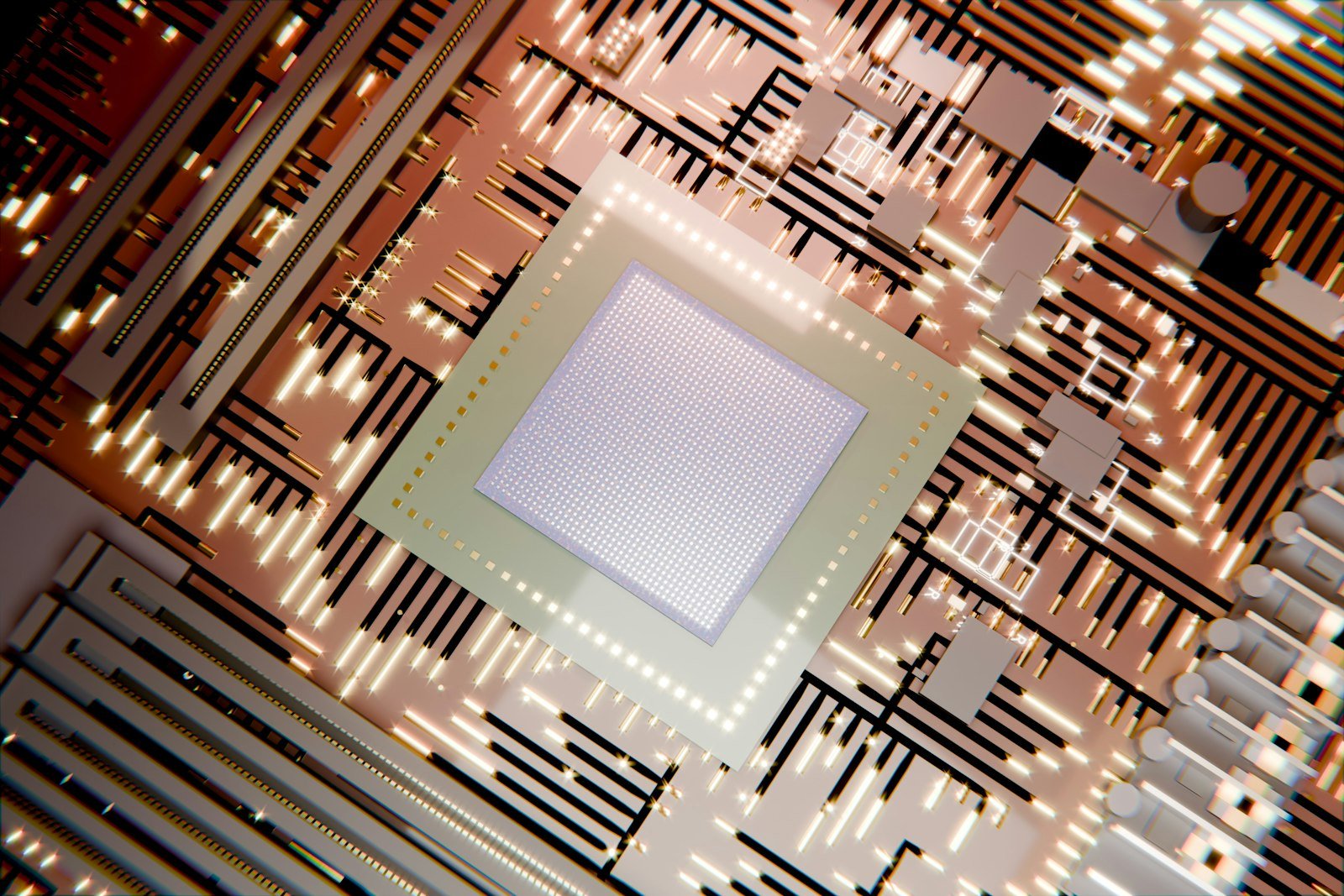
Ultrafast runs GPT-5.6 Sol on Cerebras wafer-scale chips instead of the NVIDIA GPU clusters that serve Standard and Fast traffic. A wafer-scale chip packs an entire silicon wafer into one processor instead of cutting it into hundreds of smaller chips, which cuts the distance data has to travel between memory and compute. That architecture is why Cerebras-based inference can post token-per-second numbers that GPU clusters struggle to match.
This is not OpenAI’s first experiment with alternative inference hardware, but it is the first time a wafer-scale partner has been paired directly with a flagship model tier and shipped as a named product. It signals that OpenAI sees raw latency as its own competitive axis, separate from model capability.
Why Did OpenAI Partner With Cerebras Instead of Building Its Own Chip?
Cerebras already had the hardware OpenAI needed. Its Wafer-Scale Engine 3 (WSE-3) packs 4 trillion transistors and 900,000 AI-optimized cores onto a single silicon wafer, with 44GB of on-chip SRAM and 21 petabytes per second of memory bandwidth, according to Cerebras’s own published specifications. Because the entire model can sit on that one piece of silicon, the memory-bandwidth bottleneck that slows down GPU inference largely disappears.
The partnership runs deeper than a one-off integration. Cerebras has a $10 billion deal with OpenAI to supply 750 megawatts of compute capacity, reported by SDxCentral in 2026. That scale explains why Ultrafast launched as a capacity-constrained preview rather than a day-one general release — building out hundreds of megawatts of wafer-scale infrastructure takes time, even with a signed contract in hand.
OpenAI is not the only major lab racing to lock down fast-inference hardware. Cerebras went public on May 14, 2026, and competes directly with Groq, another specialized inference chip maker. Independent benchmarks from Artificial Analysis have shown Cerebras hardware running some models over 6 times faster than Groq’s LPU chips on identical workloads. That competitive pressure between chip makers is part of why “how fast can you serve a response” is becoming as important a marketing line as “how smart is the model.”
Who Can Access the OpenAI Ultrafast API Right Now?
Access is limited to a waitlist. OpenAI opened Ultrafast as an early preview on August 13, 2026, with no confirmed general availability date and no public model ID string yet, meaning you cannot simply swap a parameter in existing code to turn it on. Developers who want early access need to request it through OpenAI’s platform and wait for an invitation.
This staged rollout is typical for OpenAI’s capacity-constrained launches. Cerebras hardware is far less abundant than commodity GPU clusters, so OpenAI is almost certainly rationing access while it scales up wafer-scale capacity behind the scenes.
Expect the waitlist to move in waves rather than all at once. OpenAI has historically opened preview features to select partners and high-usage API customers first, then widened access gradually as infrastructure catches up with demand. If your use case matches the three OpenAI has explicitly called out — voice, financial research, or incident response — you’re more likely to be prioritized than a general-purpose chatbot integration.
How Much Does the OpenAI Ultrafast API Cost?
OpenAI has not disclosed Ultrafast pricing. The only confirmed numbers are Standard mode’s $5 per million input tokens and $30 per million output tokens for GPT-5.6 Sol. Cerebras wafer-scale hardware is more expensive to operate at scale than commodity GPUs, so it would not be surprising if Ultrafast eventually carries a premium over Standard once it reaches general availability, but that is a reasonable expectation rather than a confirmed figure.
If pricing matters to your project, treat any number you see outside OpenAI’s own channels as speculation until OpenAI publishes it directly on the pricing page.
What Can You Build With Ultrafast Speed?
OpenAI names three target use cases for Ultrafast in its preview announcement, and all three share one trait: they break down when the model can’t keep pace with a human or a live event.
- Real-time voice AI — phone agents and voice assistants where a multi-second pause breaks the illusion of conversation.
- Financial research — pulling and summarizing fast-moving market data where being a few seconds late changes the answer.
- Incident response — triaging live outages or security events where every second of delay extends the incident.
Real-time voice AI is the use case OpenAI leads with, and it’s easy to see why: humans expect a reply within roughly 200-300 milliseconds in natural conversation, and anything slower starts to feel like a phone hold queue rather than a conversation. Standard-mode GPT-5.6 Sol can struggle to hit that window once you factor in network round-trips, so a 14x throughput increase can be the difference between a voice agent that feels natural and one that feels like talking to a bot.
Financial research and incident response share a different pressure: both involve streams of fast-changing information where a slow answer isn’t just annoying, it’s stale. A trading desk summarizing breaking news, or an on-call engineer asking an AI assistant to correlate logs during an active outage, both need answers before the underlying situation has already moved on.
If your product already uses GPT-5.6 for latency-sensitive workflows, Ultrafast is worth tracking even before it reaches general availability, since it changes what “fast enough” means for voice and live-data products built on the model.
What Are the Risks of Building on a Preview Tier?
Preview tiers change. OpenAI has shipped, altered, and retired preview features before, and Ultrafast carries no promise that its current speed, hardware, or feature set survives unchanged into general availability. Treat anything you build on it during the preview window as experimental rather than production-critical, at least until OpenAI publishes a stable model ID and committed pricing.
Capacity is the more immediate risk. Because Ultrafast depends on a limited pool of Cerebras wafer-scale hardware rather than commodity GPU capacity that can be scaled by renting more machines, OpenAI may throttle, queue, or pause preview access if demand outpaces available compute. Build a fallback path to Standard mode into any application that touches Ultrafast, so a capacity crunch degrades your product’s speed instead of breaking it outright.
There is also a lock-in question worth considering. Building tightly around one inference provider’s specific hardware characteristics — say, tuning your prompts or streaming logic around Ultrafast’s exact token cadence — makes it harder to switch providers later if pricing or availability changes. Keep your integration as provider-agnostic as your latency requirements allow.
How Do You Join the Ultrafast Waitlist?
- Sign in to your OpenAI developer platform account.
- Check OpenAI’s official Ultrafast preview page for the current request process, since preview programs like this typically change their intake method as demand grows.
- Describe a latency-sensitive use case in your request — voice, live data, or incident response applications are the ones OpenAI has explicitly said it’s prioritizing.
- Keep your existing Standard or Fast integration running while you wait, since Ultrafast is additive rather than a replacement API surface.
While you wait for access, it’s worth comparing how other providers are approaching inference speed and agentic workflows — our guide to AI coding assistants in 2026 covers how latency affects tool-calling performance across models, and our breakdown of Claude AI’s 2026 updates looks at how Anthropic is approaching the same tradeoffs.
How Should Developers Prepare for Ultrafast Before It’s Generally Available?
You cannot integrate Ultrafast yet without waitlist access, but you can prepare your application so the switch is painless once you get in. Start by measuring your current latency budget: log how long GPT-5.6 Sol responses actually take in Standard mode, end to end, including network overhead. That baseline tells you whether a 14x speedup would actually change user experience or whether your bottleneck lives elsewhere, like a slow database call or a downstream API.
Next, isolate the specific calls in your codebase where speed matters most — a voice agent’s first-token latency, for example, matters more than the latency of a background summarization job. Since Ultrafast is expected to launch as a distinct model ID or endpoint parameter rather than a global toggle, structuring your code so the model tier is a single configuration value, not something hardcoded across dozens of call sites, will make the eventual switch a one-line change instead of a refactor.
Finally, budget for uncertainty on price. Since OpenAI hasn’t disclosed Ultrafast pricing, avoid committing to a product roadmap that assumes Ultrafast will cost the same as Standard — build in a cost-per-request ceiling you can walk back from if the premium turns out to be significant.
Frequently Asked Questions
Is OpenAI Ultrafast a new model?
No. Ultrafast serves the existing GPT-5.6 Sol model on different hardware. Intelligence, context window, and output quality are unchanged — only the speed at which tokens arrive is different. If you’re already testing GPT-5.6 Sol prompts in Standard mode, those same prompts and outputs should carry over once you gain Ultrafast access, since nothing about the model’s reasoning changes.
How do I get access to the OpenAI Ultrafast API?
Access is waitlist-only as of August 2026. You request early access through OpenAI’s developer platform, and OpenAI is prioritizing latency-sensitive use cases like voice AI, financial research, and incident response. There’s no public self-serve toggle yet, so requesting access and describing your specific use case is currently the only path in.
Will Ultrafast cost more than Standard GPT-5.6?
OpenAI hasn’t published Ultrafast pricing yet. Standard mode costs $5 per million input tokens and $30 per million output tokens. Given the cost of Cerebras wafer-scale hardware, a premium over Standard is plausible but not confirmed — treat any pricing figure you see outside OpenAI’s own announcements as unverified.
What is Cerebras, and why does it make GPT-5.6 faster?
Cerebras builds wafer-scale AI chips that fit an entire silicon wafer onto a single processor instead of dicing it into many smaller chips. Its WSE-3 chip packs 4 trillion transistors and 44GB of on-chip memory onto that single wafer. That design shortens the path between memory and compute, which is a major reason Ultrafast can serve GPT-5.6 Sol at roughly 750 tokens per second.
Is Ultrafast available in ChatGPT, or only through the API?
As of the August 2026 preview, Ultrafast is an API-only tier for developers. OpenAI has not announced a consumer-facing ChatGPT toggle for it, so everyday ChatGPT users won’t see a speed difference from this launch.
When will Ultrafast reach general availability?
OpenAI has not announced a general availability date. As of August 2026, it remains a limited, waitlist-only preview with no confirmed timeline for a wider rollout, so plan for the preview window to last at least several more months.
Does Ultrafast work with function calling and tool use?
OpenAI hasn’t published a feature-parity breakdown between Standard and Ultrafast modes. Since Ultrafast serves the same GPT-5.6 Sol weights, function calling and tool use should work the same way in principle, but preview tiers sometimes launch with a reduced feature set before catching up to full parity, so verify against OpenAI’s current documentation before relying on it in a tool-calling pipeline.
The OpenAI Ultrafast API is still a preview, not a product you can flip on today. But the direction is clear: OpenAI is treating raw inference speed as a feature in its own right, not just a side effect of better hardware. If your product lives or dies on response latency, this is worth watching closely over the next few months.
The bigger takeaway extends beyond OpenAI. When a lab the size of OpenAI signs a multibillion-dollar deal for dedicated wafer-scale capacity just to shave milliseconds off response time, it tells you where the next round of AI product differentiation is likely to come from. Model intelligence gains have started to slow in perceptible terms release over release, while the gap between “instant” and “noticeably slow” is still wide open — and increasingly, that gap is where products win or lose users.
Sources: OpenAI — Previewing Ultrafast mode, OpenAI — Advancing the price-performance frontier with GPT-5.6.
Subscribe for Newsletter

