
 By
Humanoid robots moved from demo stages to real warehouse floors in 2026, but only in small numbers. Global installations of humanoid robots reached roughly 16,000 units in 2025, according to Counterpoint Research, and the best-funded builders — Unitree, Figure AI, and Agility Robotics — are each shipping in the hundreds to low thousands, not the tens of thousands some marketing claims suggest. That gap between headline and reality is the story of this entire category right now.
If you build or sell anything connected to automation, logistics, or AI tooling, this gap matters. The humanoid robot market is attracting billions in funding and generating a flood of viral demo videos, but very few of those robots are doing unsupervised, paid work today. This guide separates the confirmed deployments from the hype, using named sources with dates wherever a number is cited, and skips any claim that no one will put their name behind.
What Are Humanoid Robots, and How Many Are Deployed in 2026?
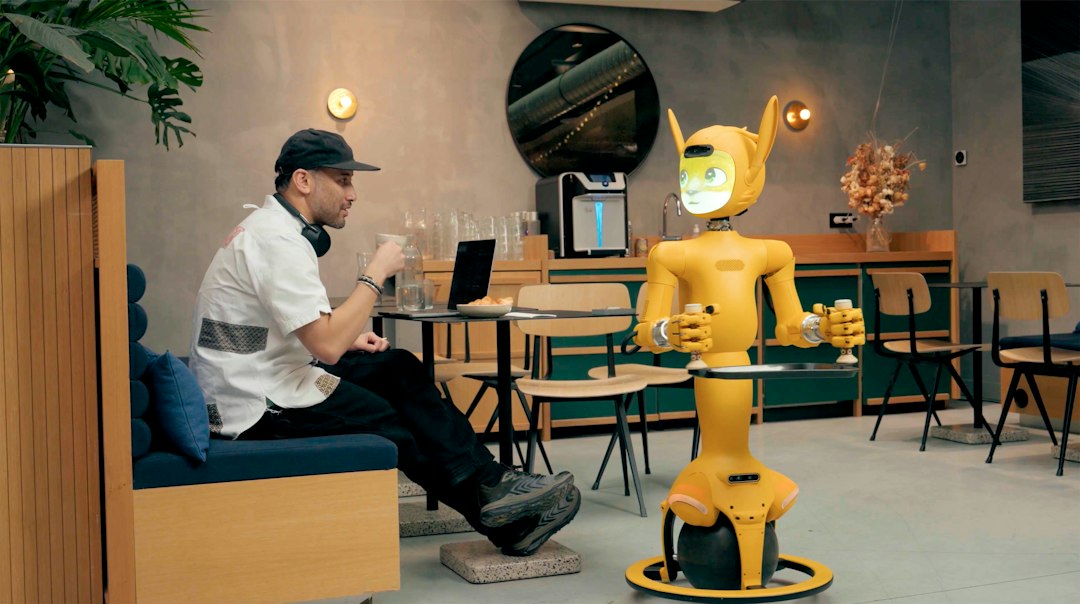
Humanoid robots are machines built with a human-like body plan — two legs, two arms, a torso, and often a head-shaped sensor housing — designed to work in spaces built for people instead of requiring a custom cell. That body plan is the whole pitch: a warehouse or factory built around human workers shouldn’t need to be rebuilt around the robot.
Counterpoint Research estimated that roughly 16,000 humanoid robots were installed worldwide in 2025, across research labs, pilot programs, and early commercial sites combined. The same research firm projects cumulative deployments could pass 100,000 units by 2027 if current order books hold, though that number depends on manufacturers actually hitting their production targets, which has been the hardest part for most of them so far.
For context on scale, that 16,000 figure is tiny next to the broader robotics industry. The International Federation of Robotics reported that the global operational stock of industrial robots — the fixed-arm machines that already run factory lines — hit a record 5 million units in 2025, with 354,000 new installations that year alone. Humanoid robots are still a rounding error next to that installed base.
Which Companies Are Leading the Humanoid Robots Market Right Now?
Four companies account for most of the confirmed, named deployments: Unitree, Figure AI, Agility Robotics, and Tesla. Each is at a different stage, and each has disclosed a different kind and amount of evidence for its claims.
Unitree shipped an estimated 5,500 humanoid units in 2025 and is targeting around 20,000 for 2026, based on figures reported from the company’s own prospectus ahead of its stock listing. That volume leads the industry, but Unitree’s Q1 2026 net profit reportedly fell 52% year over year, a sign that shipping the most units doesn’t yet mean the most profitable business.
Figure AI reached a production rate of roughly one Figure 03 robot per hour at its BotQ facility by June 2026, with a stated target of over 1,000 units for the year. Its clearest commercial deployment is a logistics agreement with Catalyst Brands, where Figure robots began working at a distribution center in Reno, Nevada.
Agility Robotics has the most verifiable real-work evidence. Its Digit robot is deployed at a GXO Logistics warehouse in Georgia under what the company calls a Robots-as-a-Service agreement, and Agility’s own reporting says Digit has moved more than 100,000 totes in live commercial operation there — not a lab demo, an actual paid logistics contract.
Tesla is the hardest to pin down. The company has never published an official Optimus production count. Independent estimates place internal use at roughly 1,000 to 1,200 units across the Fremont and Giga Texas facilities as of mid-2026, but Tesla has not confirmed those figures, and claims of more than 50,000 cumulative units circulating online are not attributed to any company statement. Treat any specific Optimus number you see as unconfirmed until Tesla itself publishes one.
Are Humanoid Robots Actually Replacing Factory Workers?
Not yet, and not at meaningful scale. The clearest evidence of humanoid robots doing paid, supervised work comes from logistics — moving totes, bins, and packages — rather than from precision manufacturing tasks like welding or wiring harness assembly, which still belong to traditional industrial arms and skilled human workers.
The Schaeffler deal illustrates the current pace well. Automation supplier Humanoid signed an agreement in May 2026 to deploy an estimated 1,000 to 2,000 humanoid robots across Schaeffler’s global manufacturing sites — but the rollout target is 2032, not 2026. That six-year runway is typical: companies are signing deals now to lock in supply, while the actual floor-level deployment happens gradually, after extensive safety and reliability testing.
Hyundai’s plan for Boston Dynamics’ electric Atlas follows the same pattern. Atlas is being tested at Hyundai’s Metaplant America facility in Georgia, but the company’s own timeline targets operational scale on the factory floor for 2027 and 2028, not this year. If you read a 2026 headline claiming Atlas is “now working” at Hyundai, it almost certainly refers to a supervised pilot, not an unsupervised production line.
What’s realistic today is a human-robot handoff: humanoid robots take over repetitive, physically strenuous tasks like moving totes or restocking shelves, while people handle quality checks, exceptions, and anything requiring judgment. That pattern matches what’s already happened with warehouse automation generally, and it’s a gentler transition than the “robots replacing workers” headlines suggest — though it’s still worth watching, especially alongside the broader wave of AI-driven job cuts already reshaping tech hiring in 2026.
How Much Do Humanoid Robots Cost Today?
Humanoid robot prices range from roughly $16,000 for Unitree’s lower-end research units up to $250,000 or more for fully capable commercial systems like early Figure or Agility deployments, based on figures the manufacturers themselves have published or quoted to press. Where a company hasn’t disclosed a price, it’s excluded here rather than estimated.
That price spread exists because “humanoid robot” covers very different products. A research-grade unit with basic walking and grasping is a different purchase than a warehouse-ready robot with the sensing, battery life, and software stack needed to run an eight-hour shift without a human minder nearby. Buyers comparing quotes should ask exactly which capability tier they’re paying for, since the headline price alone doesn’t tell you much.
Running costs matter as much as the purchase price. Agility and Figure both sell Robots-as-a-Service contracts rather than one-time hardware sales, which shifts maintenance, software updates, and uptime guarantees onto the vendor. For a warehouse operator, that subscription model is often the more realistic way to budget for a humanoid robot pilot in 2026, since the hardware itself is still changing every few months.
Humanoid Robots vs Traditional Industrial Robots: What’s the Difference?
Humanoid robots and traditional industrial robots solve different problems, and most factories will end up running both side by side rather than replacing one with the other. The table below compares them directly, using the most recent figures available from named sources.
| Factor | Humanoid Robots (2026) | Traditional Industrial Robots |
|---|---|---|
| Mobility | Walks on two legs, navigates spaces built for people | Fixed base or wheeled cart, follows a pre-programmed path |
| Reported price range | ~$16,000–$250,000+ per unit | ~$25,000–$100,000 per arm (established market) |
| Global install base | ~16,000 units (Counterpoint Research, 2025) | ~5 million units (IFR, 2025) |
| Strongest current use case | Tote moving, light logistics, supervised pilots | Welding, precision assembly, high-speed repetition |
| Deployment maturity | Early commercial pilots | Decades of proven, unsupervised operation |
The takeaway from this comparison is simple: traditional industrial robots already won the high-speed, high-precision, fixed-task jobs years ago, and humanoid robots aren’t trying to take those jobs back. Humanoid robots are aimed at the messier, more variable tasks — picking irregular items, walking between stations, handling the “last 10%” of a workflow that a fixed-arm robot can’t reach.
What’s Standing in the Way of Humanoid Robots at Scale?
Three things are slowing humanoid robots down: battery life, manufacturing capacity, and trust. None of them are solved yet, and all three show up directly in the deployment numbers above.
Battery life limits most current humanoid robots to a few hours of continuous work before a swap or recharge, which is why many pilots run on fixed shifts with a charging rotation rather than the 24/7 operation a warehouse would actually want. Manufacturing capacity is the second wall: Figure’s “one robot per hour” milestone sounds fast until you compare it to how many units a single Amazon fulfillment center would need to matter at scale.
Trust is the least technical but hardest problem. Safety regulators, insurers, and the workers sharing floor space with these machines all need a track record before unsupervised operation becomes normal, and that track record is built one cautious pilot at a time — which is exactly why Schaeffler’s 1,000-to-2,000-unit deal has a 2032 target instead of a 2026 one. For teams evaluating where else AI is moving faster than regulation or trust can keep up, it’s worth comparing this pace against how quickly AI agents are already being weaponized in cyberattacks — a reminder that physical deployment and software deployment move on very different timelines.
The compute and chip side is improving faster than the mechanical side. Modern humanoid robots increasingly rely on the same class of specialized AI silicon covered in our breakdown of AI inference chips built for real-time, on-device processing, which is what lets a robot react to a dropped box or an unexpected obstacle without routing every decision through the cloud.
How Do Humanoid Robots Actually Learn New Tasks?
Most humanoid robots learn through a mix of teleoperation and imitation learning rather than hand-coded instructions for every movement. An operator guides the robot through a task — picking up a box, opening a door — and the robot’s model studies thousands of these demonstrations until it can repeat similar motions on its own.
Figure AI, Unitree, and Tesla have each described training their humanoid robots on large collections of video and teleoperation data rather than task-specific scripts, following the same “foundation model” approach that reshaped chatbots and image generators. The idea is that one general-purpose model can handle many physical tasks, instead of engineers writing separate code for every warehouse layout.
This is also where humanoid robots lean hardest on the broader AI boom. The same generation of specialized processors that run large language models also handles the split-second balance and grip decisions a walking robot needs, which is why chip shortages and export rules for advanced AI hardware are now a direct bottleneck for robotics timelines, not just a cloud-computing story.
What Do Warehouse Workers Think About Humanoid Robots?
Reaction from the workers sharing floor space with humanoid robots has been mixed, based on reporting from the sites running live pilots. Some logistics staff describe the robots as taking over the most repetitive, injury-prone tasks — repetitive tote-moving and overhead reaching — which frees people for inspection and exception-handling work that pays better and causes fewer injuries.
Labor groups are more cautious. Unions representing warehouse and manufacturing workers have asked for advance notice before humanoid robots are introduced to a site, along with retraining guarantees for staff whose roles change as a result. None of the current named deployments — GXO, Catalyst Brands, Schaeffler — have published a public labor agreement specific to humanoid robots, so this remains an open question rather than a settled practice.
The honest middle ground, based on the deployment evidence above, is that humanoid robots are currently additive rather than substitutive at the sites running real pilots: they’re filling labor gaps in roles that are already hard to staff, not replacing a full shift of existing workers outright. That could change as production volumes rise, but the 2026 data doesn’t yet support a “mass layoff” narrative.
Should Your Business Pilot a Humanoid Robot in 2026?
For most small and mid-sized businesses, the honest answer is not yet. The companies running real humanoid robot pilots today — GXO, Catalyst Brands, Schaeffler — are large logistics and manufacturing operators with the volume, safety staff, and budget to absorb a multi-year pilot that might not pay off. A small operation is usually better served by narrower automation.
If your business already runs AI-driven workflows for scheduling, inventory, or customer service, the more immediate opportunity is refining those systems rather than adding a humanoid robot on top. Our guide to building AI agent workflows for small businesses covers the lower-cost automation most teams should tackle first, before a six-figure robotics pilot makes sense.
Watch Tesla’s Optimus line specifically before making any purchasing decision based on its claims. The regulatory scrutiny already facing Tesla’s Cybercab program shows how slowly safety reviews move for new autonomous hardware, and Optimus will likely face a similar runway before any independently verified production numbers exist.
How Are Regulators Handling Safety Around These Machines?
Safety oversight for walking, lifting machines sharing space with people is still being written, not finalized. In the United States, OSHA has not issued a dedicated standard for this category; current pilots instead fall under general industry safety rules written for stationary equipment, which weren’t designed with a two-legged, mobile coworker in mind.
That regulatory gap is part of why the biggest named deals move so slowly. A six-year rollout window like Schaeffler’s gives safety teams time to run incident-free pilots, document edge cases, and build the internal case studies that insurers will eventually want before underwriting wider use. It’s a slower process than the funding headlines suggest, but it’s also the same path every major piece of factory automation has followed before reaching unsupervised scale.
Europe’s approach leans on existing machinery and AI-system rules rather than a bespoke category for this hardware, which means a walking warehouse assistant sold in the EU already has to clear the same risk-assessment bar as other industrial equipment, plus any AI-specific transparency requirements that apply to its decision-making software. No major manufacturer has reported a serious safety incident from a named commercial pilot as of this writing, which is itself one of the better signs for the category’s near-term credibility.
Frequently Asked Questions About Humanoid Robots in 2026
How many humanoid robots exist in the world right now?
Roughly 16,000 humanoid robots were installed worldwide in 2025, according to Counterpoint Research. That figure covers research units, pilot programs, and early commercial deployments combined, not a single standardized robot type.
Which company has shipped the most humanoid robots?
Unitree reported shipping around 5,500 humanoid units in 2025 and is targeting roughly 20,000 in 2026, the highest volume among named manufacturers, based on figures from the company’s own stock-listing prospectus.
Is Tesla’s Optimus actually working in factories?
Tesla has not published an official Optimus production or deployment count. Independent estimates suggest around 1,000 to 1,200 units in internal use as of mid-2026, but Tesla itself has not confirmed that figure.
What jobs are humanoid robots actually doing today?
The best-documented jobs are warehouse logistics tasks: moving totes, bins, and packages. Agility Robotics’ Digit has moved more than 100,000 totes at a GXO warehouse in Georgia under a live commercial contract, not a demo.
How much does a humanoid robot cost to buy or lease?
Published prices range from about $16,000 for research-grade units to $250,000 or more for commercial-ready systems. Several manufacturers, including Agility and Figure, also offer Robots-as-a-Service subscriptions instead of a one-time purchase.
When will humanoid robots be common in everyday workplaces?
Most named deployment timelines point to 2027 through 2032 for broad factory-floor use, not 2026. Schaeffler’s 1,000-to-2,000-unit deal targets 2032, and Hyundai’s Atlas testing targets operational scale for 2027 to 2028.
Subscribe for Newsletter

