
 By
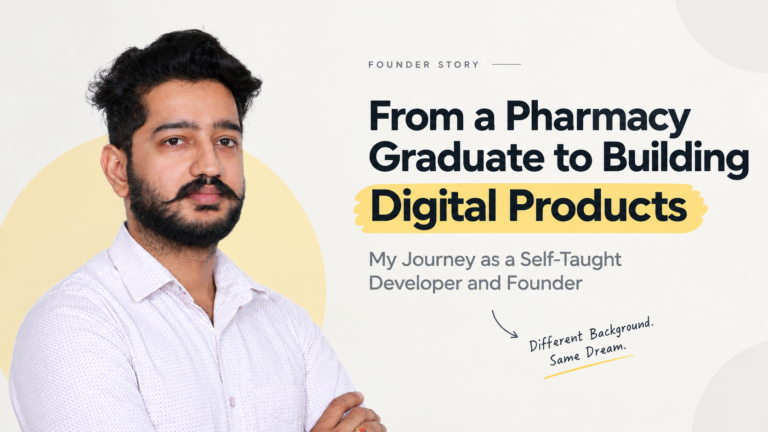
After graduating in pharmacy in 2013, I chose a different path. With no formal computer science background, limited resources, and a willingness to learn, I moved into web development, taught myself design, and began building digital businesses. Today, my journey includes independent tools, content websites, and product discovery platforms, each shaped by years of experimentation, setbacks, and learning.
A Career I Never Planned, but Chose to Build
In 2013, I graduated in pharmacy. Like many graduates, I was expected to follow a conventional career path connected to my education. But somewhere along the way, my interests began to move in a different direction.
I was becoming increasingly curious about websites, design, and the technology behind the things people used on the internet. I did not have a computer science degree, a technical mentor sitting beside me, or a clear roadmap explaining how to become a developer. What I had was access to the internet and the willingness to figure things out.
Today, it is easy to take online learning for granted. Artificial intelligence tools can explain code, generate examples, and help developers troubleshoot problems in minutes. When I started learning development, that was not the reality.
Stack Overflow and GitHub became two of my most useful resources. I would search for problems, read discussions, study code written by other developers, and try to understand why something worked. Sometimes the solution was straightforward. At other times, I would spend hours trying different approaches before finding an answer.
That process taught me something important early in my career: learning technology is not simply about memorising code. It is about developing the patience to investigate problems, understand unfamiliar concepts, and keep going when the solution is not obvious.
I was not following a perfectly planned career strategy. I was discovering what I enjoyed, one small experiment at a time.
Learning Development Without a Traditional Technical Background
My early development journey was built around self-learning. YouTube tutorials, developer communities, documentation, and practical experimentation became my classroom.
I would watch a tutorial, open my own project, and try to recreate what I had seen. Then I would change things, break them, and work out how to fix them. Following instructions could help me understand the basics, but experimenting independently was what gradually built my confidence.
The internet made learning possible, but it did not make learning effortless. There were plenty of moments when I could not understand why a particular piece of code behaved differently from what I expected. Finding the right explanation sometimes meant reading several answers, comparing approaches, and testing them myself.
Looking back, I value that stage because it taught me how to learn independently. Technology changes constantly, and the ability to teach yourself a new skill is often more valuable than knowing one particular framework or programming language.
Alongside development, I was also exploring graphic design. I began working with Adobe Photoshop and discovered that I enjoyed the visual side of digital products as much as the technical side.
For design learning, channels such as GFXMentor and PiXimperfect were valuable resources. They helped me explore Photoshop, understand techniques, and improve my ability to create visual work.
At that stage, I did not know exactly where these skills would take me. I was simply building a collection of abilities that interested me: development, visual design, problem-solving, and creating things for the internet.
Eventually, those skills would become an important part of how I approached websites and digital products.
Moving to Chandigarh in 2014
In 2014, I moved to Chandigarh to improve my development skills and learn more about building websites professionally.
E-commerce was an area I wanted to understand better. I decided to take a course focused on WordPress and WooCommerce, which offered a practical way to learn how online stores were built and managed.
The course itself was only around one hour a day. What happened outside that hour mattered much more.
I did not have a bike at the time. I would take an auto from my paying guest accommodation to Sector 34 in Chandigarh to attend the class. After the class finished, I would return to my PG and spend much of the day practising what I had learned.
I repeated this routine for approximately five to six months.
The classroom gave me a starting point, but the real learning happened when I sat down on my own and tried to build things. I experimented with WordPress, explored WooCommerce, tested different configurations, and tried to understand how websites worked beyond the examples shown in class.
There was no shortcut. I had to put in the hours, repeat concepts, and learn from mistakes.
I remember this period as an important turning point because it changed my relationship with learning. Instead of treating a course as something I needed to complete, I began treating every new concept as something I needed to practise until I could use it independently.
That distinction made a difference.
It also taught me that progress does not always look impressive from the outside. Sometimes it looks like travelling to a one-hour class, returning to a small room, and spending the rest of the day working through problems that nobody else is watching you solve.
Those ordinary days helped build the foundation for everything that followed.
When Development and Design Started Coming Together
As I continued learning, I began to see the connection between development and design.
A website is not just a collection of code. It is an experience that someone has to understand, navigate, and trust. A technically functional website can still be difficult to use if its layout is confusing. A visually attractive interface can still fail if the underlying functionality is unreliable.
My experience with Photoshop helped me think about visual hierarchy, composition, spacing, and presentation. My development experience helped me understand how to turn those ideas into working websites.
Over time, I became interested in the complete process of creating digital experiences rather than focusing on only one part of the work.
That combination also influenced how I approached client projects and digital products. I wanted to understand not only how to build something, but also why it should look and work a particular way.
Working across development and design encouraged me to think about details that are easy to overlook when concentrating on only one discipline. The way a page communicates its purpose, how a user moves through a form, whether a layout feels consistent, and how quickly someone can understand a tool all matter.
These questions would later become especially relevant to one of my own products: a tool designed to help people evaluate UI designs.
Building Websites and Learning Through Real Work
As my skills developed, I continued building my experience through websites, design work, and digital projects.
Real work introduces problems that tutorials cannot fully prepare you for. A project might look simple at first, but then requirements change, a plugin behaves unexpectedly, a layout breaks at a different screen size, or a feature works technically but does not make sense to the person using it.
Each project becomes another opportunity to learn.
I gradually became more comfortable working through these situations, researching unfamiliar problems, and finding practical solutions. The same habits I developed in the early days of Stack Overflow searches and YouTube tutorials continued to help me.
I also began to understand the difference between completing a project and building something that can remain useful over time. A website needs more than an attractive homepage. It needs reliable functionality, clear communication, maintenance, and a reason for people to return.
This perspective influenced the way I thought about online businesses.
Instead of seeing websites only as projects to deliver, I became increasingly interested in what they could become when they provided ongoing value to users.
That interest led me towards publishing content, building useful online resources, and experimenting with products of my own.
Discovering the Business Side of the Internet
Building something is one challenge. Finding an audience for it is another.
As I explored digital publishing and online businesses, I learned that useful products do not automatically attract visitors. People need to discover them, understand what they offer, and have a reason to trust them.
Search engines, content strategy, website performance, user experience, and monetisation all became part of the learning process.
I began working on projects that could attract visitors through useful content and practical tools. Some were focused on information, some on entertainment, and others on solving specific problems for people working online.
One of my projects is KineTools, which is already monetised and generates some earnings. The income is not substantial, but that is not the only thing that makes the experience valuable. It demonstrates that a website can develop into a small revenue-generating asset when it offers something people find useful.
There is an important difference between earning a little money from a website and building a sustainable business. I am still working towards the larger goal, and I do not consider the journey complete.
But even modest earnings provide useful feedback. They encourage you to examine what attracts visitors, which pages are useful, how people discover the site, and what needs to improve.
That experience has reinforced my interest in building independent digital properties instead of relying entirely on one source of income.
The Websites and Projects Behind My Journey
Over the years, my interests have expanded into several digital properties. Each represents a different aspect of what I have learned about development, content, design, and online business.
NitinMonga.in: My Personal Website and Digital Workshop
Nitin Monga is my personal website and a place where I can bring together my experience, content, and practical tools.
I use it to publish articles and develop utilities that address real problems. It is also a way to explore ideas that I might not be able to pursue within a client project.
The website includes a tools directory and a blog. These are not simply separate sections added to fill a website. They give me a place to turn practical experience into resources that other people can use.
Developing and maintaining the site also requires thinking about search visibility, content quality, usability, privacy, technical reliability, and monetisation.
It has become an ongoing project in which I can test ideas, learn from actual usage, and improve products over time.
UI Design Analyzer: Turning Design Experience Into a Tool
One project I am particularly interested in developing further is the UI Design Analyzer.
The idea comes from my experience working with visual design and digital interfaces. Reviewing a design involves more than deciding whether it looks attractive. It requires examining spacing, hierarchy, consistency, alignment, typography, accessibility considerations, and other details that influence the quality of the interface.
I wanted to make that evaluation process more accessible through a practical tool.
The UI Design Analyzer uses AI-powered visual analysis to examine an uploaded design and provide structured feedback. It can help designers identify potential issues and think about improvements they might otherwise overlook.
My intention is not to position it as a replacement for an experienced designer. Design is contextual, and automated feedback cannot fully understand every business requirement, user need, or creative decision.
Instead, I see it as an additional source of feedback that can support the design review process.
Building this tool has also changed the way I think about product development. A tool is not trustworthy merely because it produces an impressive result. People need to understand what it evaluates, what its limitations are, how their data is handled, and how much confidence they should place in its recommendations.
That is why improving the tool’s explanations, transparency, and usefulness is an ongoing part of the work.
For me, this project connects two interests that began years apart: learning to build websites and learning how to create better visual designs.
Vizloft.com: Helping Independent Builders Get Discovered
Another project is Vizloft.com, a product discovery platform for independent builders.
The internet makes it possible for almost anyone to create a website, launch a software product, or start a small digital business. But publishing a product is only the beginning. Getting it discovered by the right people can be difficult, particularly for independent founders who do not have large marketing budgets.
Vizloft is my attempt to work on that problem.
The broader idea is to help people discover products and the builders behind them, while giving independent creators another place to present their work.
Building a discovery platform introduces challenges beyond writing code. A platform needs a reason for people to submit products, reasons for visitors to return, and a clear way to make the experience useful as the directory grows.
It also requires trust. Listings should communicate value clearly, and the platform should provide an honest experience for both builders and visitors.
I see Vizloft as a long-term project rather than something that becomes successful simply by going live. Its value will depend on the quality of its listings, the usefulness of its discovery experience, and the community it can gradually attract.
KineTools.com: Learning From a Monetised Website
KineTools.com is another important part of my journey because it has already been monetised and generates some revenue.
The earnings are modest, but I am proud of the progress because building a website that earns money, even on a small scale, offers a different kind of learning from building a project purely for practice.
It encourages you to consider the relationship between usefulness, traffic, advertising, content quality, and long-term maintenance.
Monetisation also brings responsibility. A website should not be designed only to generate page views. It should provide a worthwhile experience for its visitors and maintain a balance between advertising and usability.
I am still learning how to improve the performance of my digital properties, attract the right audience, and make their business models more sustainable.
KineTools is part of that ongoing process.
DJYoungster.com: Exploring Digital Publishing
DJYoungster.com represents another part of my experience with online publishing.
Different websites serve different audiences, and working across multiple properties helps me appreciate how much the subject, audience, content format, and distribution strategy influence a site’s direction.
Not every website follows the same growth path. Each requires its own understanding of what visitors want and how the content can remain useful.
Maintaining different projects has also taught me to think carefully about focus. It is easy to start new ideas, but keeping a website useful over time requires consistent effort and a clear understanding of its purpose.
RaiseKnowledge.com: Building Around Information
RaiseKnowledge.com is another digital property in my portfolio.
Information-based websites depend on more than publishing frequently. They need clear organisation, useful explanations, and content that answers questions readers actually have.
This is particularly important in a search environment where people can find countless pages covering the same subject. The challenge is to make a resource genuinely useful rather than simply producing another page on a familiar topic.
Working on digital content has strengthened my belief that publishing should be approached as a long-term responsibility. Content needs to be reviewed, improved, and kept relevant wherever necessary.
VoxyOn.com: Continuing to Experiment
VoxyOn.com is also part of my wider digital journey.
Having multiple projects allows me to explore different ideas and learn from different types of websites. At the same time, it requires discipline to decide where to invest time and which projects deserve the most attention.
I do not believe every experiment has to become a major business to be worthwhile. Some projects teach you about technology, others about audiences, and others about what you should do differently next time.
The important thing is to learn from the experience rather than treating every launch as a final result.
Together, these websites reflect an ongoing effort to understand how useful digital products and content businesses can be built, improved, and sustained.
What Building My Own Products Has Taught Me
One of the biggest lessons from this journey is that creating a product and building a business around it are two different jobs.
When you are developing a feature, the problem is usually specific. You need to make something work, resolve an error, improve a layout, or deliver a result.
When you are building a business, the questions become broader.
Who needs this product? How will they find it? Why would they choose it over an alternative? What makes it trustworthy? Will it remain useful after the first visit? How can it support its own operating costs?
These questions do not always have immediate answers.
Search traffic can fluctuate. Some content performs better than expected, while other work receives little attention. A product can be technically complete but still need significant improvements before it becomes genuinely useful to its intended audience.
I have learned not to treat launching as the finish line.
A launch creates an opportunity to observe real behaviour, collect feedback, identify weaknesses, and make informed improvements. The more honestly you assess the product, the easier it becomes to distinguish between what you hoped would work and what actually helps users.
This is particularly relevant when working with AI-powered products. AI can make certain capabilities easier to implement, but it does not remove the responsibility to test the product, explain its limitations, protect user data, and provide a reliable experience.
The technology is only one part of the product. The quality of the decisions around it matters just as much.
Learning in the Age of AI
My early development years were shaped by a very different learning environment from the one available today.
Back then, I relied heavily on YouTube tutorials, Stack Overflow discussions, GitHub repositories, and experimentation. Finding an answer often required searching through multiple discussions and working out which explanation applied to my particular problem.
AI has changed that process considerably.
It can help explain unfamiliar code, suggest approaches, and speed up certain parts of development. I see it as a useful tool that can make learning and building more accessible.
But using AI does not eliminate the need for understanding. Generated code can be incorrect, recommendations can miss important context, and an implementation that works in one situation may fail in another.
My approach is to use modern tools while retaining the habits that helped me learn in the first place: question the result, test the implementation, investigate errors, and take responsibility for the finished product.
I do not think the goal should be to avoid new technology. The goal should be to use it intelligently.
Someone learning development today has access to resources that were not available in the same form when I started. That is an opportunity, provided they are willing to practise, evaluate what they learn, and build something beyond a tutorial example.
The Reality of Being an Independent Founder
There is a romantic version of entrepreneurship in which a person has one great idea, builds a product, and watches it grow.
My experience has been much more gradual.
It involves moving between development, design, content, search visibility, monetisation, and product decisions. It means working on improvements that may not produce immediate results and accepting that some experiments will not develop as planned.
It also means making decisions with limited resources. Independent projects cannot always rely on a large team or a substantial marketing budget. Time has to be allocated carefully, and priorities need to change as new information becomes available.
I am still working towards building more sustainable digital businesses. Some of my projects already generate revenue, while others remain works in progress. I would rather describe that honestly than present every experiment as a success story.
For me, being a founder is not simply about owning a website or choosing a title. It is about taking responsibility for what you build, learning from the results, and continuing to improve it.
The progress may be slower than expected, but it becomes meaningful when each stage adds experience that can be applied to the next one.
What Comes Next
My current focus is on making my digital products more useful, reliable, and sustainable.
That includes improving the UI Design Analyzer, developing Vizloft as a place for product discovery, and continuing to learn from my existing websites. It also means paying closer attention to the quality of content, the experience visitors have on each site, and the reasons people might return.
I want the products I build to solve clear problems rather than exist simply because a technology makes them possible.
I also want to become better at the business side of building products. That means understanding audiences, improving distribution, making responsible monetisation decisions, and creating resources that earn people’s trust.
There is still a great deal to learn. I do not consider myself someone who has figured everything out. I am someone who has spent years learning how to build, has made mistakes along the way, and continues to experiment.
That is what makes this journey interesting to me.
A Message to Anyone Starting From Scratch
If there is one thing I would share with someone who wants to move into technology from a completely different background, it is this: your starting point does not have to determine your entire career.
I graduated in pharmacy in 2013 and began exploring development without a traditional technical education. I learned through online resources, practised what I studied, moved to Chandigarh to improve my skills, and spent months building my understanding one day at a time.
There was no single moment when everything suddenly became clear. There were many small moments of progress, frustration, and discovery.
The same principle continues to apply when building businesses. You do not need to know every answer before you begin. You need a problem worth exploring, the willingness to learn, and the patience to improve your work as you go.
Start with what you have. Use the resources available to you. Build practical projects. Learn from people who have more experience. Listen to feedback, and do not mistake a finished first version for a finished product.
Most importantly, give yourself permission to change direction when you discover something that fits your interests and strengths better.
My journey from pharmacy graduate to self-taught developer and independent founder has not followed a straight line. It has been shaped by curiosity, practice, and a willingness to keep building.
I am still on that journey, and I am looking forward to seeing what the next stage brings.
Subscribe for Newsletter

