
 By
ByAmazon Prime Air drone delivery is expanding to nearly 500 U.S. cities and towns by the end of 2026, a sixfold jump from today’s 11 metro areas, according to Amazon’s own August 2026 announcement. The service flies the MK30 drone to drop packages under 5 pounds in as fast as 30 minutes. This guide covers the current rollout, the MK30’s real specs, what you can order, the FAA rules behind it, and how to check if your zip code is next.
What Is Amazon Prime Air Drone Delivery?
Amazon Prime Air is Amazon’s drone delivery service, and as of August 2026 it operates in 11 metro areas across seven states — Arizona, Florida, Kansas, Louisiana, Michigan, Nebraska, and Texas (Amazon, 2026). The service has completed hundreds of thousands of deliveries in 2026 alone, with thousands going out daily, up from roughly 16,000 total deliveries recorded as of February 2026 (FAA, 2026). Each drone site currently covers about 175 square miles, so an entire small city can be served from a single distribution hub without a traditional delivery van.
Each site works from a dedicated drone delivery hub co-located near an existing Amazon fulfillment center. An eligible order gets packed into the MK30’s cargo box, the drone flies a route it plans in real time to the customer’s address, drops the package, and returns to the hub to recharge before its next flight. That local hub-and-spoke model is why coverage is capped at roughly a 7.5-mile radius per site instead of citywide from day one.
Prime Air is not new. Amazon has run pilot versions of the program since 2016, but 2026 is the year the service moved from scattered pilot cities to a genuine nationwide network. The difference this year is scale: instead of testing in one or two metro areas, Amazon is layering drone delivery onto its existing same-day infrastructure across dozens of new markets at once.
Ordering is built directly into the regular Amazon Shopping app rather than a separate app or website. Eligible products show a drone or “30-minute delivery” badge on the product page itself. Prime members get the delivery free on orders of $50 or more, and pay $2.99 on smaller orders; shoppers without a Prime membership can still use it for a flat $4.99 fee (Amazon, 2026).
How Many Cities Will Get Prime Air Drone Delivery by the End of 2026?
Amazon plans to bring drone delivery to nearly 500 U.S. cities and towns by the end of 2026, a sixfold increase over its current footprint, according to Amazon’s official transportation newsroom. The expansion adds metro areas around Chicago, Atlanta, Cleveland, Syracuse, and Boise first, followed by additional coverage reaching Detroit, Dallas, Houston, Omaha, and Tampa.
- Chicago metro area
- Atlanta metro area
- Cleveland metro area
- Syracuse metro area
- Boise metro area
- Detroit, Dallas, Houston, Omaha, and Tampa (following waves)
Each new site follows the rollout pattern Amazon used in its original markets: a distribution hub with roughly a 7.5-mile drone radius, a public comment period tied to FAA environmental review, and then a phased customer invite before general availability. That means a city appearing on Amazon’s roadmap often starts as a waitlist for specific zip codes rather than blanket coverage overnight.
What Can the MK30 Drone Actually Deliver?
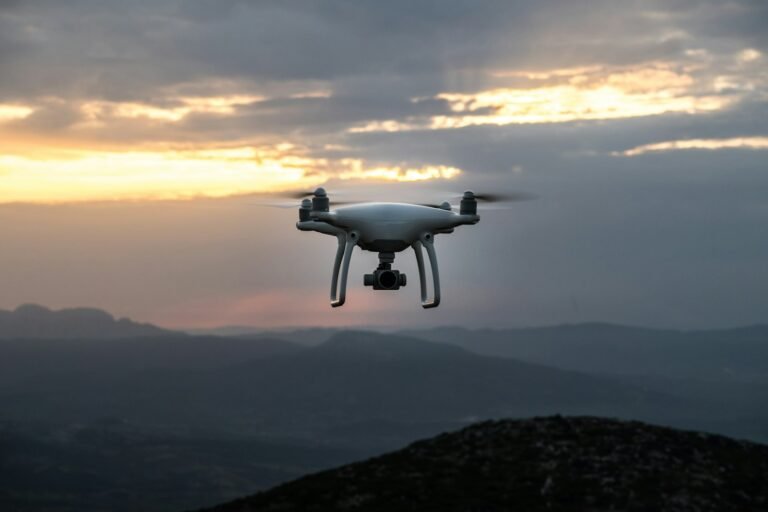
Amazon’s current delivery drone, the MK30, is an electric aircraft that weighs 77.9 pounds empty and has a maximum takeoff weight of 83.2 pounds, leaving roughly 5 pounds of usable payload capacity (FAA, 2026). That cap sounds small, but Amazon says it covers more than 60% of the items customers order most often: phone chargers, over-the-counter medication, small electronics, cosmetics, and grocery basics.
The MK30 flies beyond visual line of sight (BVLOS) and is built to detect and avoid obstacles on its own, which is what lets it operate over denser suburban neighborhoods rather than just open fields. Amazon says a typical order arrives in as fast as 30 minutes from checkout to doorstep, which undercuts most one-hour grocery delivery services.
“As fast as 30 minutes” is a ceiling, not an average. Amazon’s own figures show most orders actually land closer to 60 minutes after checkout once queue time, distance from the nearest site, and weather delays are factored in. That is still faster than most same-day delivery windows, but shoppers expecting a guaranteed half-hour turnaround every time will be disappointed on busier days.
Here is how the rollout has scaled since Amazon’s first commercial flight, based on figures Amazon and the FAA have each published:
| Milestone | Date | Coverage | Deliveries (source) |
|---|---|---|---|
| First Part 135 flight | 2020 | Pendleton, Oregon (1 site) | Pilot program (FAA, 2026) |
| Early 2026 footprint | Feb 2026 | 5 states | ~16,000 total (FAA, 2026) |
| Current footprint | Aug 2026 | 11 metro areas, 7 states | Hundreds of thousands in 2026 (Amazon, 2026) |
| End-of-2026 target | Dec 2026 (target) | ~500 cities and towns | 1 million goal (Forbes, 2026) |
How Does the Amazon Delivery Drone Actually Drop Off a Package?
The MK30 cruises at 115 to 400 feet, well above rooftop level, and only begins its descent once it is directly over the destination address, according to Amazon’s own safety documentation. Amazon designed the flight path this way on purpose, so the drone is not buzzing past windows on its way in — it stays high until the last moment, then drops straight down to the yard.
Onboard cameras and sensors scan the landing zone for people, pets, and obstacles before the drone releases the package, and the same sensors handle obstacle avoidance during flight (Amazon, 2026). Amazon has stated that this onboard footage is used only for the drone’s own navigation and is not recorded or monitored as a live video feed back at a distribution center.
Is Amazon Prime Air Drone Delivery Noisy or a Privacy Concern?
Amazon says the sound during the roughly 30-second drop-off is quieter than an idling delivery truck at the curb, and at cruising altitude the drone is comparable to a window fan on its low setting, often inaudible indoors (Amazon, 2026). Amazon’s own noise exposure analysis for new sites concludes that every flight phase stays below the FAA’s DNL 65-decibel threshold for noise-compatible land use.
Not every community is convinced. Residents in parts of Michigan raised noise and privacy objections as Prime Air expanded there in 2026, according to the Detroit News. The complaints center on repeated flyovers in quiet neighborhoods rather than the volume of any single flight, which is why FAA environmental reviews for new sites now include dedicated public comment periods before drones start flying.
How Does Amazon Get FAA Approval for Drone Deliveries?
Amazon Prime Air operates under a Part 135 air carrier certificate, the same regulatory category the FAA uses for small charter airlines, adapted here for uncrewed aircraft. Amazon was the first company to fly a drone heavier than 55 pounds under a standard Part 135 certificate, starting with its first commercial flight in Pendleton, Oregon, in August 2020 (FAA, 2026).
Before Amazon can add a new metro area, the FAA requires an environmental assessment covering noise, wildlife impact, and public safety, plus a public comment period. That process is why new cities appear on Amazon’s roadmap months before drones actually start flying there — the paperwork alone often takes longer than the physical buildout of a site.
How Does Prime Air Compare to Walmart and Zipline Drone Delivery?
Amazon is not the only company racing to build a drone delivery network in 2026. Walmart’s partner Wing (an Alphabet company) and Zipline have already crossed 1 million combined commercial deliveries as of May 2026, according to Walmart’s own corporate newsroom, and Walmart plans to reach roughly 20 markets and 40 million Americans as its rollout continues.
| Operator | Current cities/markets | Max payload | 2026 milestone |
|---|---|---|---|
| Amazon Prime Air | 11 metro areas (targeting ~500 by year-end) | 5 lbs | Hundreds of thousands of deliveries in 2026 (Amazon, 2026) |
| Walmart + Wing | ~20 markets across the US | 5 lbs | 1 million+ combined deliveries by May 2026 (Walmart, 2026) |
| Zipline | Dallas, Houston, Cleveland, NW Arkansas | 8 lbs | Partner businesses grew 13x in H1 2026 (DroneLife, 2026) |
The comparison shows Amazon leading on raw city count ambition, while Zipline’s slightly larger payload capacity appeals to businesses shipping bulkier items like takeout food or larger retail goods. All three operators fly under FAA Part 135 authority, so the regulatory ceiling is the same for everyone — the competition is really about who builds distribution hubs the fastest.
The field got even more crowded in August 2026. DoorDash launched its own FAA-certified service, DoorDash Air, though the company told Fortune that human Dashers still handle the vast majority of its daily deliveries, including large orders and apartment-building drop-offs a drone can’t manage. Uber announced a separate partnership with Zipline the same week, meaning four of the largest names in retail and delivery are now flying packages instead of just driving them.
What’s Driving the 2026 Expansion Push?
Prime Air’s vice president, David Carbon, told employees in a March 2026 all-hands meeting that the division expects to reach 1 million deliveries by the end of the year, according to Forbes’ August 2026 reporting. That target only makes sense with the kind of city count Amazon is now chasing, since hitting a million drone deliveries requires far more than 11 metro areas’ worth of demand.
The push also lines up with a broader shift in how U.S. regulators treat autonomous delivery and transport. The same August 2026 news cycle that covered Prime Air’s expansion also reported Nevada regulators opening Las Vegas streets to thousands of robotaxis, suggesting 2026 is the year autonomous last-mile logistics stopped being a novelty and started being infrastructure.
What Are the Risks and Limitations of Drone Delivery?
The 5-pound weight cap is the most obvious limitation. Anything heavier than a couple of grocery bags still needs a van or a walking courier. Weather is the second constraint: MK30 drones don’t fly in heavy rain, high wind, or lightning, so delivery windows can slip during storms.
Noise is the recurring community objection. FAA environmental assessments filed for new Prime Air sites include dedicated technical noise reports, because drone flight paths over neighborhoods generate complaints that a delivery truck idling at the curb typically doesn’t. Coverage is also still local: each site serves roughly a 175-square-mile radius, so living in an expansion state doesn’t guarantee your specific address qualifies.
There’s also a cost question nobody outside Amazon can fully answer yet. Building a drone hub, clearing FAA review, and running a fleet of MK30s is not cheap, and Fortune’s August 2026 reporting frames the current expansion as a genuine “delivery war” between Amazon, Walmart, Uber, and DoorDash rather than a side project. Whether drone delivery becomes profitable on its own or simply protects each company’s share of same-day orders is still an open question industry analysts are watching closely.
What Happens If an Amazon Delivery Drone Hits Bad Weather Mid-Flight?
Amazon says the MK30’s onboard systems are built to bring the drone to a safe, controlled landing on their own if it encounters severe weather, a system fault, or another unexpected event mid-flight, rather than continuing toward the original destination (Amazon, 2026). That is separate from the everyday weather rule: Prime Air simply won’t dispatch a drone into heavy rain, high wind, or lightning in the first place, so most weather-related delays happen before takeoff, not during flight.
This matters for the FAA approval process described below, since regulators require operators to show a credible fail-safe plan for every flight phase before granting Part 135 authority for a new site. Amazon’s safety filings cover engine-out scenarios, lost GPS signal, and loss of communication link, each with its own automated landing behavior.
None of these fail-safes are unique to Amazon — Wing, Zipline, and DoorDash Air all have to clear the same FAA bar to keep their Part 135 certificates, since the rules apply to the aircraft category rather than to any single company. What differs between operators in practice is how conservative each one is about grounding drones early, which is part of why weather-related delay windows vary from one service to another even in the same city.
How to Check If Amazon Prime Air Drone Delivery Reaches Your City
- Open the Amazon Shopping app and search for an eligible item, then look for a “drone delivery” or “30-minute delivery” badge at checkout.
- Enter your delivery address. Amazon only shows drone delivery as an option if your address falls inside an active site’s radius.
- Check the item’s weight and size. Prime Air only offers drone delivery for eligible items under 5 pounds that fit the drone’s cargo box.
- If it’s not available yet, sign up for notifications on Amazon’s Prime Air landing page so you know when your city goes live.
Before you test it out, make sure your phone is running current software so the Amazon app behaves correctly. See our iOS 26.6.1 security update guide if you’re on iPhone, or our Google Pixel 11 Pro XL guide if you’re checking deliveries from a new Android phone.
Drone delivery is one piece of a much larger shift toward instant, automated logistics. For more on the hardware side of that shift, see our iPhone 17 complete guide, and for a look at how AI is reshaping how people browse and shop online, see our ChatGPT Atlas browser guide.
Frequently Asked Questions About Amazon Prime Air Drone Delivery
Is Amazon Prime Air drone delivery free?
It depends on your order and membership. Prime members get free drone delivery on orders of $50 or more and pay $2.99 on smaller orders; shoppers without Prime pay a flat $4.99 delivery fee (Amazon, 2026). There’s no separate subscription required beyond a regular Amazon account.
How fast is Amazon Prime Air drone delivery?
Amazon advertises delivery in as fast as 30 minutes from the moment you place an eligible order to the moment the drone drops it in your yard (Amazon, 2026). Actual time varies with distance from the site and current weather.
What items can Prime Air drones deliver?
Eligible items must weigh under 5 pounds and fit the MK30’s cargo box. Amazon lists groceries, over-the-counter medication, small electronics, and cosmetics as core categories, together covering more than 60% of its most commonly ordered products (Amazon, 2026).
Is Amazon Prime Air drone delivery safe and legal?
Yes. Prime Air operates under an FAA Part 135 air carrier certificate, first granted in 2020, which covers beyond-visual-line-of-sight commercial drone flights (FAA, 2026). Every new site also passes a dedicated FAA environmental and safety review before it opens.
When will Prime Air drone delivery reach my city?
Amazon is rolling out to nearly 500 cities and towns by the end of 2026, starting with metro areas around Chicago, Atlanta, Cleveland, Syracuse, and Boise (Amazon, 2026). Check the Amazon Shopping app with your address to see current eligibility.
How heavy of a package can an Amazon delivery drone carry?
The MK30 drone has a maximum takeoff weight of 83.2 pounds and weighs 77.9 pounds unloaded, which leaves roughly 5 pounds of usable payload for the package itself (FAA, 2026).
Subscribe for Newsletter

